
Guide
Hand embroidery saree price in Bangladesh: hand stitch and patchwork
9 min read
Key takeaways
A hand-stitched cotton saree costs about ৳2,200 to ৳5,500 in Bangladesh in 2026: ৳2,250–৳2,450 at small online shops, ৳2,177–৳2,882 for Aarong's embroidered cotton, ৳5,000–৳5,500 for Kumudini's kantha stitch. Silk or muslin with kantha or appliqué costs ৳15,000 to over ৳32,000. Turn it over: white bobbin thread means a machine.
On this page8
- How much does a hand embroidery saree cost in Bangladesh?
- What does ৳2,000, ৳5,000 or ৳15,000 buy?
- Why does hand stitching cost more than machine embroidery?
- How can you tell hand stitch from machine embroidery?
- What is a patchwork saree, and what is aanchal work?
- Which hand-stitched saree should you wear, and when?
- How do you wash and care for a hand-stitched cotton saree?
- Where can you buy a hand embroidery saree online in Bangladesh?
How much does a hand embroidery saree cost in Bangladesh?
A hand-stitched cotton saree costs about ৳2,200 to ৳5,500 in Bangladesh in late 2026. Small online shops sell cotton sarees with hand stitch or patchwork for ৳2,250 to ৳2,450, Aarong's embroidered cotton sarees cost ৳2,177 to ৳2,882, and Kumudini's kantha-stitched sarees ৳5,000 to ৳5,500. Denser embroidery runs to ৳10,000, and silk or muslin with kantha or appliqué costs ৳15,000 to over ৳32,000.
Three things set the price: how much of the saree is stitched, the cloth underneath, and whether the work is really done by hand. A border and aanchal of running stitch is days of work. A silk body covered in kantha is weeks.
Hand embroidery and patchwork saree prices at a glance
| Saree | Price | Where and when |
|---|---|---|
| Plain cotton saree, for comparison | ৳1,180–৳1,600 | Deshi Fabrics online, November 2026 |
| Patchwork khadi cotton, hand work not stated | ৳1,650 on sale (৳2,250 regular) | Tusi's Collection online, November 2026 |
| Cotton saree sold as "hater kaj" (hand work) | ৳2,250–৳2,350 | Deshi Fabrics online, November 2026 |
| Pure cotton, 14 haath, hand block, hand stitch and patchwork | ৳2,450 | Khacha, Rajshahi, November 2026 |
| Cotton, printed or brush-painted and embroidered, or appliquéd and embroidered | ৳2,177–৳2,882 | Aarong, November 2026 |
| Cotton sarees, printed or with floral embroidery, online brand Iha | ৳3,000–৳15,000 | Falgun collection, January 2026 |
| Embroidered saree from a Dhaka fashion house | ৳4,700–৳10,000 | Adril's Collections, April 2025 |
| Kantha-stitched saree | ৳5,000–৳5,500 | Kumudini, January 2026 |
| Silk, muslin or georgette with embroidery, cutwork, beads or zari | ৳1,500–৳12,000 | Dhaka markets, March 2025 |
| Muslin, appliquéd and embroidered | ৳15,182–৳17,502 | Aarong, November 2026 |
| Silk or muslin with nakshi kantha embroidery | ৳18,309–৳32,405 | Aarong, November 2026 |
We read the shop prices on each shop's own website on 5 November 2026 and rounded Aarong's to the taka. The other rows come from Prothom Alo and Risingbd reports, dated in the table. For the price of the woven saree under the stitching, see our Tangail saree price guide. For every handloom family and what each costs, see our handloom saree types guide.
What does ৳2,000, ৳5,000 or ৳15,000 buy?
- Under ৳2,000. Usually a plain cotton saree, or a patchwork saree that doesn't say how it was stitched. In November 2026 one online shop listed a patchwork khadi cotton saree at ৳1,650 on sale without calling it hand-stitched. Don't assume hand work at this price: ask.
- ৳2,200 to ৳3,000. A cotton saree with real hand stitch or patchwork on the border and aanchal. Khacha's 14-haath pure cotton saree with hand block, hand stitch and patchwork cost ৳2,450, and Deshi Fabrics' hand-work cotton sarees ৳2,250 to ৳2,350. This is the sweet spot for daily wear, the office and Falgun.
- ৳4,700 to ৳10,000. Denser hand embroidery, with motifs across the body. Adril's Collections, a Dhaka fashion house, priced its embroidered sarees at ৳4,700 to ৳10,000 for Pohela Boishakh 2025, and Kumudini's kantha-stitched sarees cost ৳5,000 to ৳5,500 in January 2026.
- ৳15,000 and up. Embroidery on silk or muslin. Aarong's appliquéd and embroidered muslin sarees cost ৳15,182 to ৳17,502, and its nakshi kantha silk sarees ৳18,309 to ৳32,405. Budget here for a wedding, or a gift for your mother.
Kantha also comes as bed covers, wall pieces and cushion covers: our Nakshi Kantha price guide has those prices.
Why does hand stitching cost more than machine embroidery?
Because a needle moves one stitch at a time. Rita Mondal of Adril's Collections told Risingbd in April 2025 that embroidery takes a long time, so embroidered clothes are priced a little higher. An older Daily Star report from Nilphamari, from August 2012, put numbers on it: finishing the design on a silk saree took at least 15 days, artisans were paid ৳700 to ৳1,200 a saree, and the saree sold for ৳5,000 to ৳30,000 in Dhaka. Those are 2012 prices, but a saree still takes weeks of one person's hands.
What moves the price:
- Coverage. Work on the aanchal and border only costs least. Motifs across the whole body cost most.
- The cloth. The same kind of work costs several times more on muslin or silk. At Aarong in November 2026, an appliquéd and embroidered cotton saree cost ৳2,595 and the appliquéd muslin ones ৳15,182 to ৳17,502.
- Stitch density. Rows of running stitch go quickly. Filled kantha motifs and satin stitch don't.
- Who you buy from. A maker selling direct charges less than a showroom, but a showroom has a name to protect.
Machine embroidery isn't a fraud, and it's cheaper for a reason. In March 2025 a shop in Dhaka's Gausia market told Prothom Alo that its saree bodies carried hand work, machine work, screen or block print and hand painting, all side by side. The problem starts when machine work is sold at a hand-work price.
How can you tell hand stitch from machine embroidery?
Turn the saree over. Machine embroidery usually gives itself away on the back:
- White thread on the back. An embroidery machine holds the coloured top thread down with a bobbin thread, often white. Mary Corbet of Needle 'n Thread found a machine-made piece showing white thread on the back that appeared nowhere on the front.
- Threads carried from motif to motif. A machine follows a logical path, carrying the thread from one motif to the next without a break. Hand embroiderers normally hide their thread on the back.
- Perfect evenness. Machine stitches are uniform in size, and the motifs line up as if placed with a ruler. Machine fill often runs straight across a shape instead of following its curve. In hand running stitch, the stitch lengths and gaps vary a little.
- A shiny, tightly twisted thread. Machine embroidery often uses glossy rayon. Hand embroidery thread is usually softer and less tightly twisted.
Then ask the seller who did the stitching and how long one saree takes. Someone selling real hand work answers straight away. The hand stitch clothing guide has the same checks for kurtis and panjabis, and our post on handmade vs machine Nakshi Kantha shows them on kantha.
What is a patchwork saree, and what is aanchal work?
A patchwork saree has pieces of other fabric stitched onto it, usually along the border and on the aanchal, the end of the saree that falls over the shoulder. Sewing shapes onto a ground cloth is strictly called appliqué, and Aarong labels its sarees "appliquéd". Bangladeshi online shops mostly call it patchwork, and many pair the patches with hand stitch. "Aanchal work" means the decoration sits on the aanchal, so the body stays plain and light.
To tell hand from machine, look at the edge of each patch:
- Machine appliqué is usually stitched down with a zigzag or satin stitch: a dense, even band that covers the raw edge, as the School of Stitched Textiles explains.
- Hand appliqué usually turns the edge under and holds it with tiny stitches you can hardly see, or with decorative stitching that is meant to show.
On cotton, patchwork is the most wearable hand work: the patches add colour without weight, and the work sits where people see it.
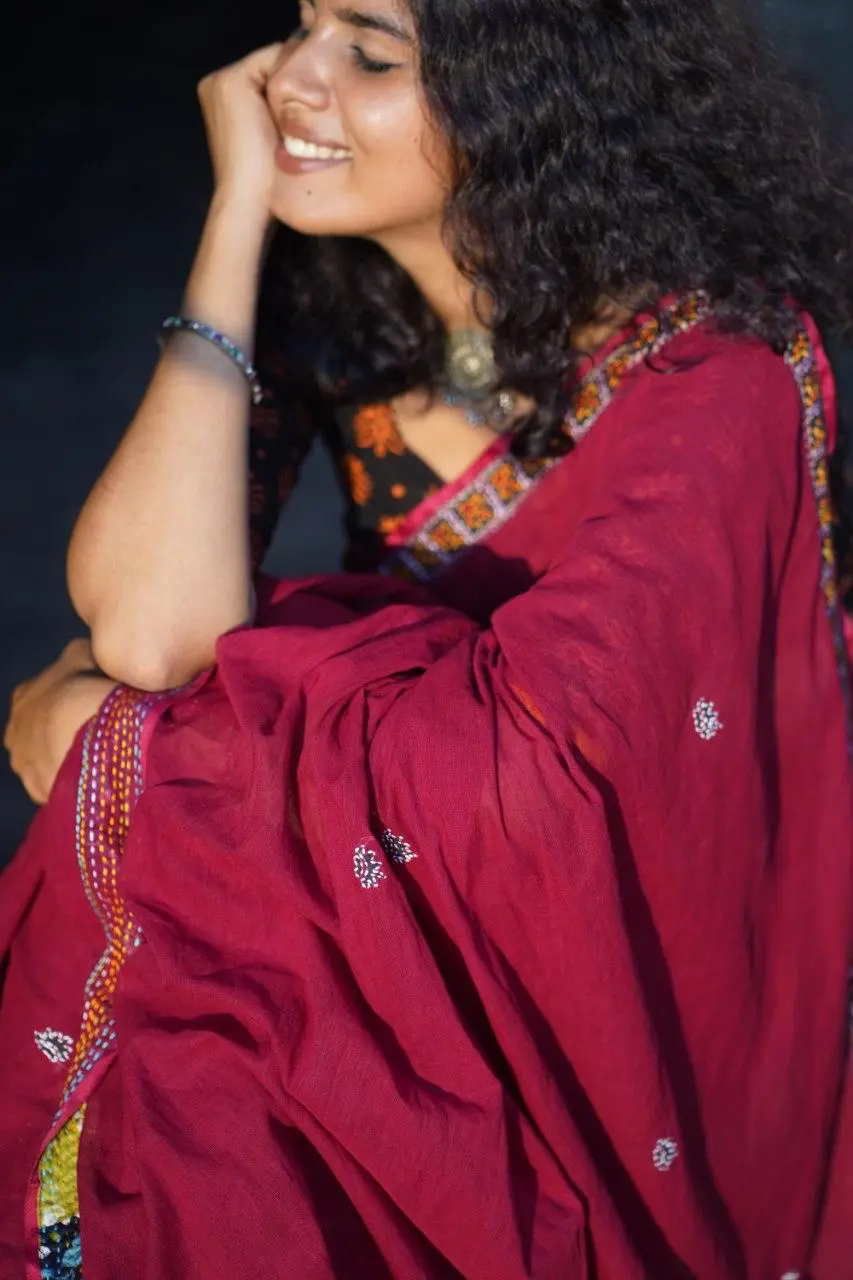
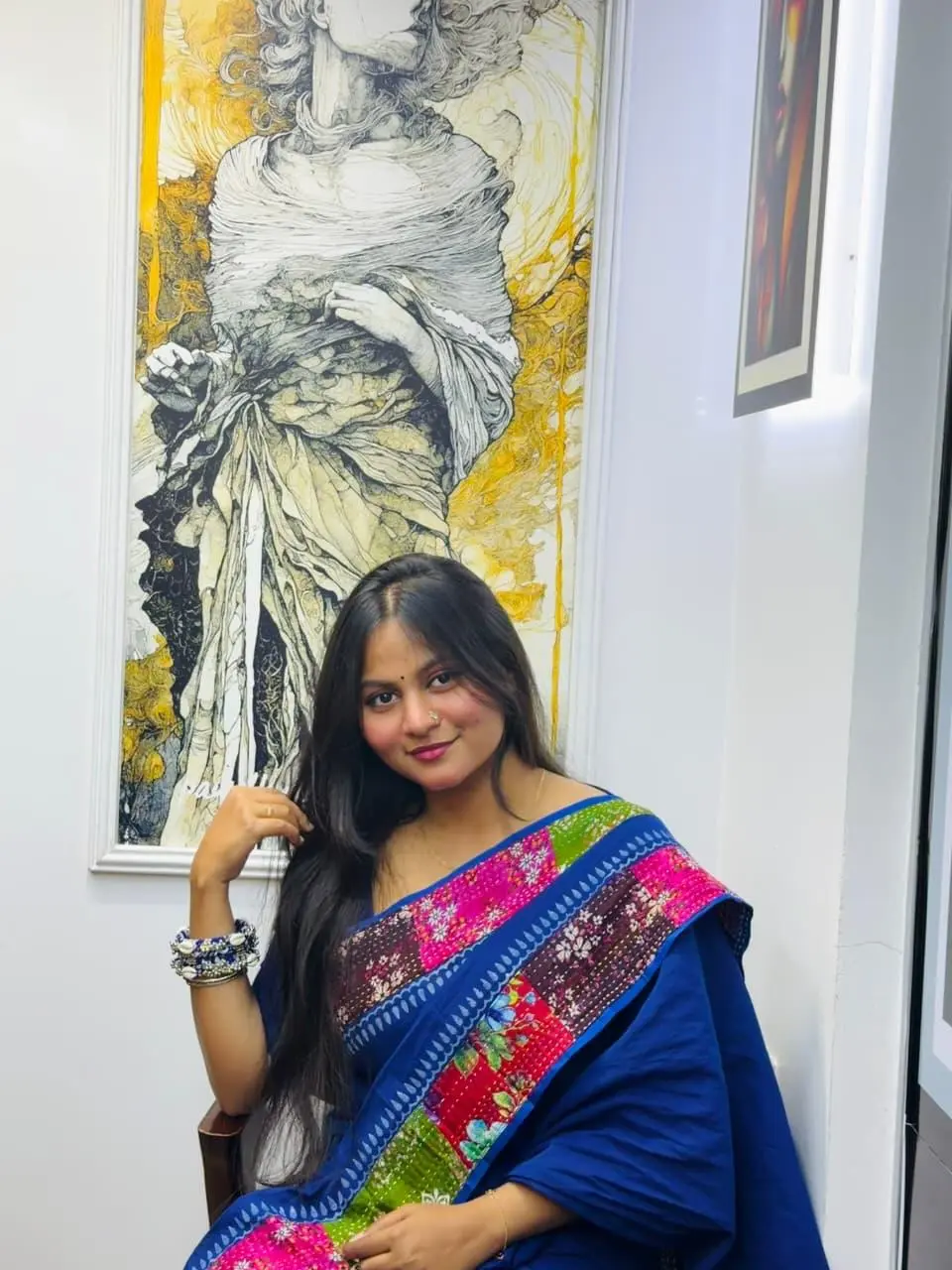
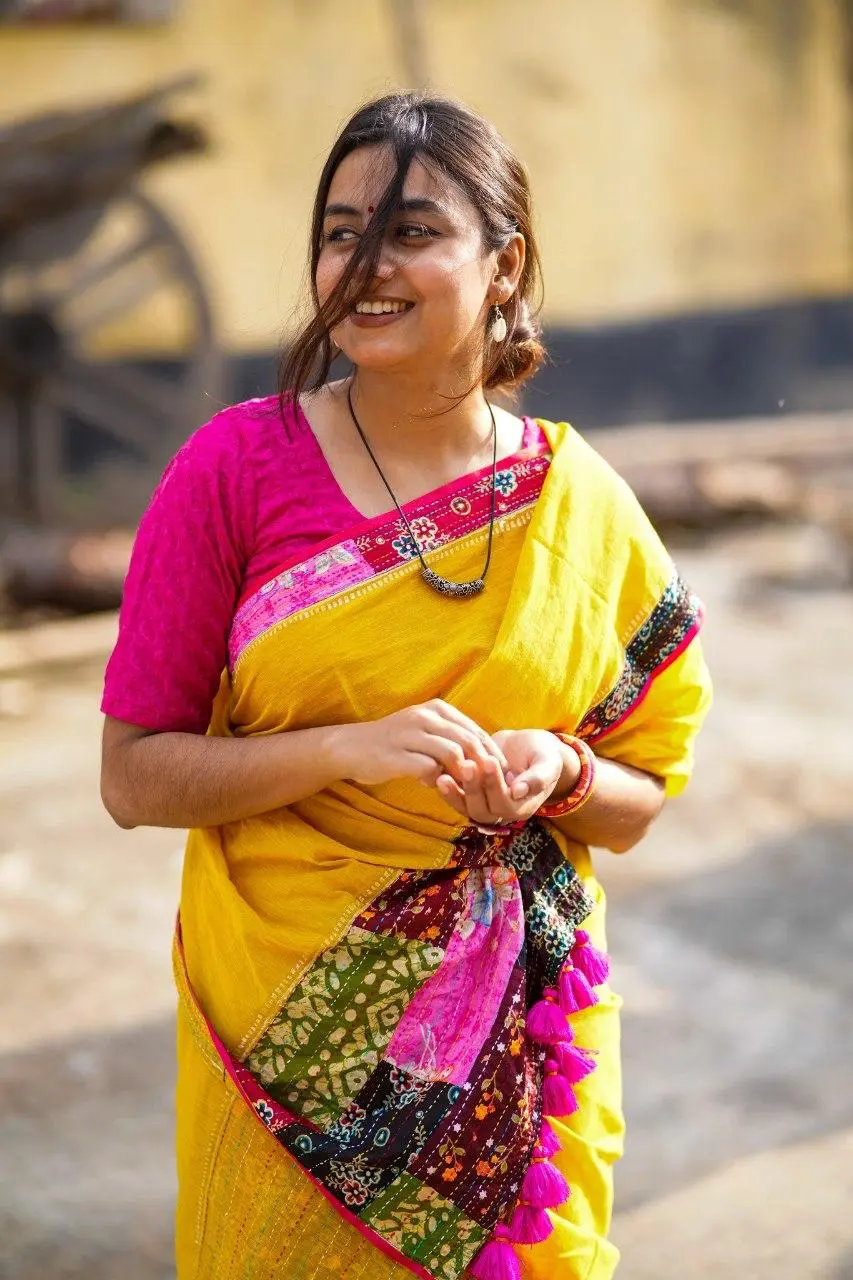
Tangail cotton sarees with hand stitch and patchwork on JADUZ, by the maker Boshon:
Which hand-stitched saree should you wear, and when?
- Daily wear and the office. Cotton, with work on the border and aanchal only. It breathes in the heat and stays light enough for a full day.
- Pohela Falgun. Yellow and basanti. "The colours of Falgun are the many shades of yellow and basanti," Balaram Pal, the designer behind Haritoki, told Prothom Alo in January 2026. Another online brand, Bimurto, worked hand and machine embroidery on white cotton, kota and muslin that season, so ask which one you're buying.
- Pohela Boishakh. Red and white. Sara Lifestyle led its 2026 Boishakh collection with red-and-white sarees, and in April 2025 the owner of Adril's Collections told Risingbd she would wear an embroidered saree on a cotton ground on Boishakh.
- Gaye holud. A cotton saree suits a holud best, and the classic is yellow with a red border, now joined by orange, deep green and mehendi green, a 2018 Biyeta wedding guide noted. A yellow, mustard or orange hand-stitched cotton works for the bride's friends as well as the bride. For the trays, see our holud dala and tattwa guide.
- Weddings and evenings. Move up to silk or muslin with kantha or appliqué, or to a jamdani: our jamdani saree price guide sets out the prices by count.
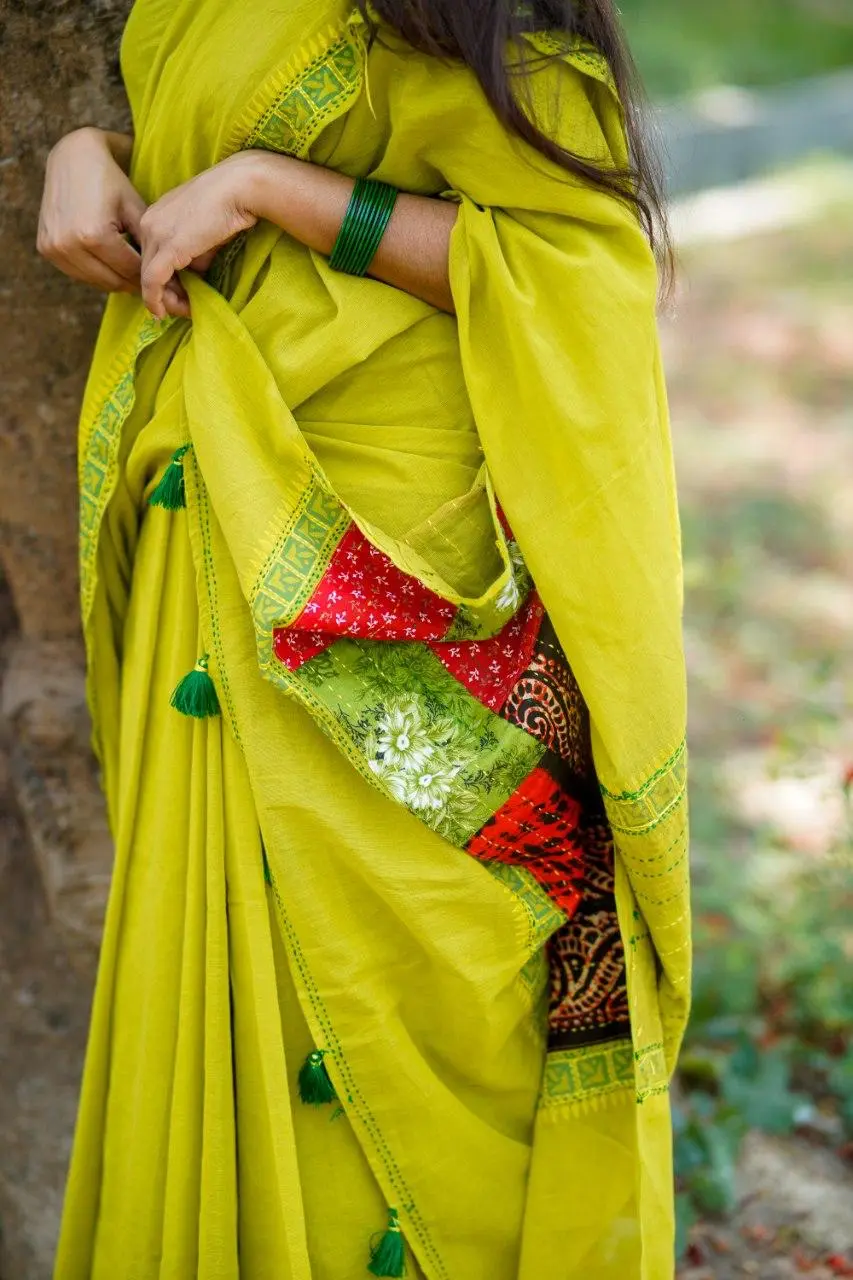
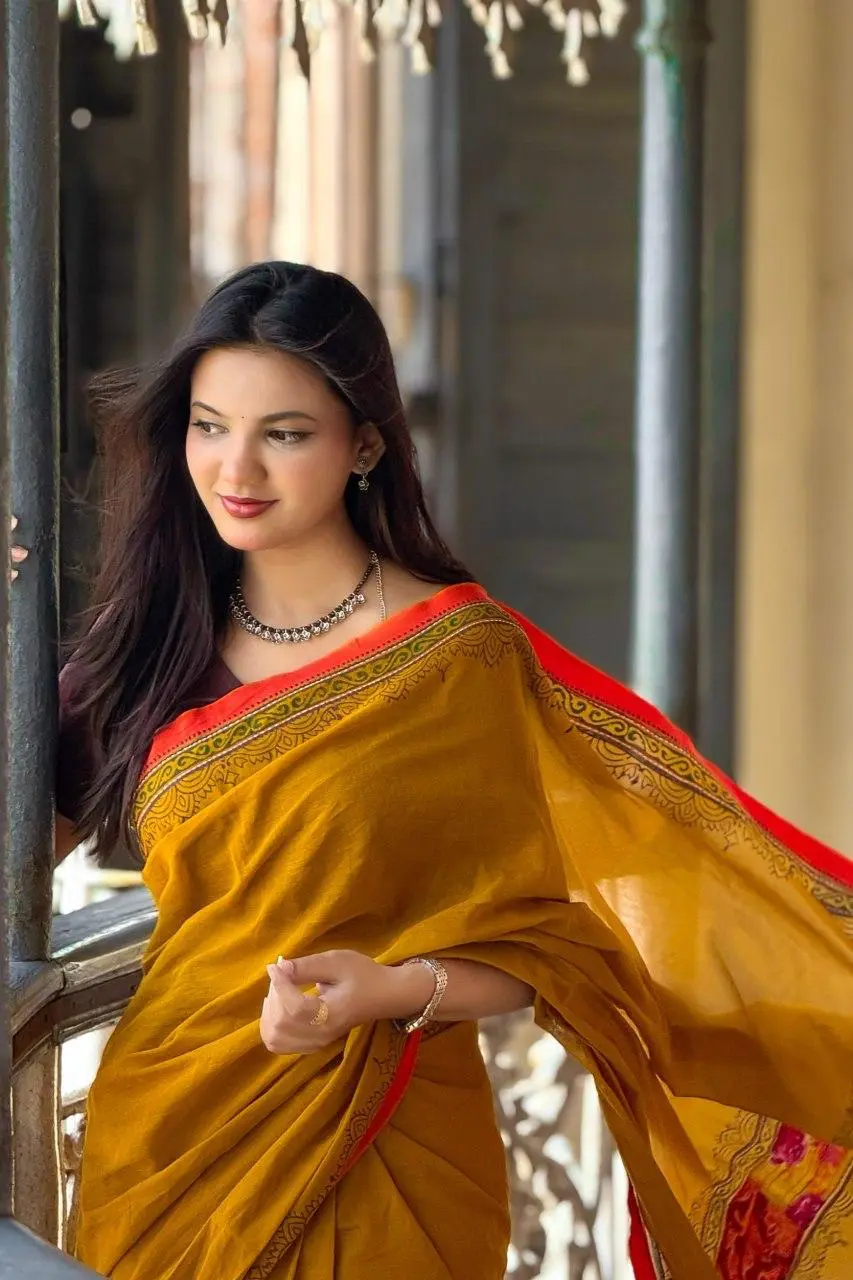
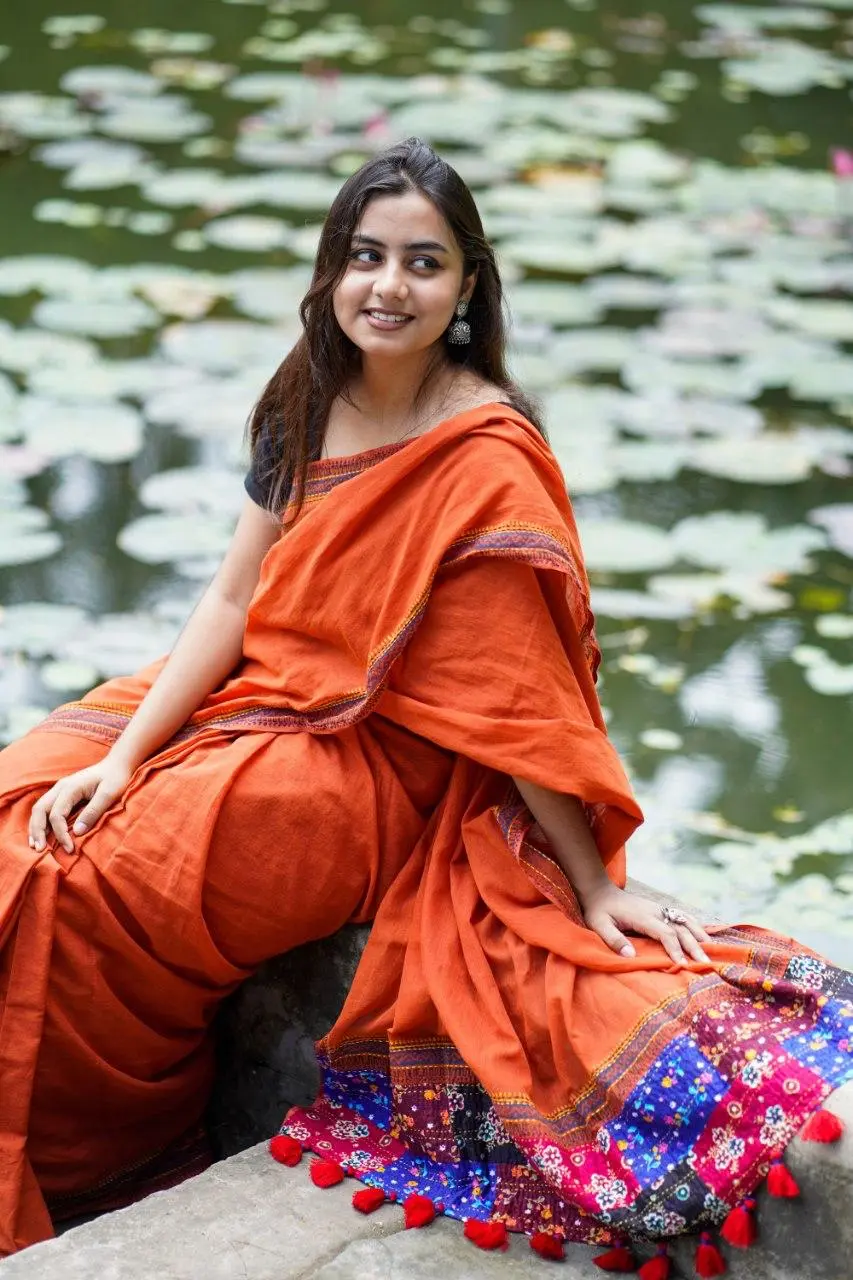
Yellow, mustard and orange Tangail cotton sarees with hand stitch, also by Boshon:
How do you wash and care for a hand-stitched cotton saree?
- Hand wash it in cold water with a mild detergent, then starch it. That's Aarong's care note for its Tangail cotton sarees. Cold water also helps stop the colours bleeding.
- Skip bleach and fabric softener, and don't wring. Fold the saree and squeeze the water out gently, then hang it to dry in the air.
- Iron it inside out, or through a thin cloth, so the stitches and patches don't get flattened or scorched.
- Check the care note first. Silk, and gold or silver thread work, may need dry cleaning instead.
The hand stitch clothing guide has the full care list. For the first wash of a new Tangail cotton, follow the colour-fixing step in our Tangail guide.
Where can you buy a hand embroidery saree online in Bangladesh?
- Aarong. The most choice, and the highest prices for silk and muslin, but its embroidered cotton sarees cost ৳2,177 to ৳2,882 in November 2026.
- Kumudini. Kantha-stitched sarees for ৳5,000 to ৳5,500 in January 2026.
- Small online shops. Shops such as Khacha in Rajshahi and Deshi Fabrics sold hand stitch and patchwork cotton for ৳2,250 to ৳2,450. Ask for a photo of the back of the work before you pay.
- Dhaka markets. In March 2025 they sold silk, muslin and georgette with embroidery, cutwork, beads or zari for ৳1,500 to ৳12,000, but hand and machine work hang side by side.
- JADUZ. The saree shop has Tangail cotton sarees with hand stitch and patchwork by Boshon. Every maker is vetted for portfolio, proof of making and identity, and every piece is approved before it goes live. You can find a patchwork saree for less elsewhere, as the table shows. What you get here is a named maker, a call to confirm the order and cash on delivery anywhere in Bangladesh. Open the parcel in front of the rider before you pay: if the saree is damaged, wrong or not as described, hand it back and pay nothing. Once the rider leaves there are no returns, and none for a change of mind. The returns page has the details.
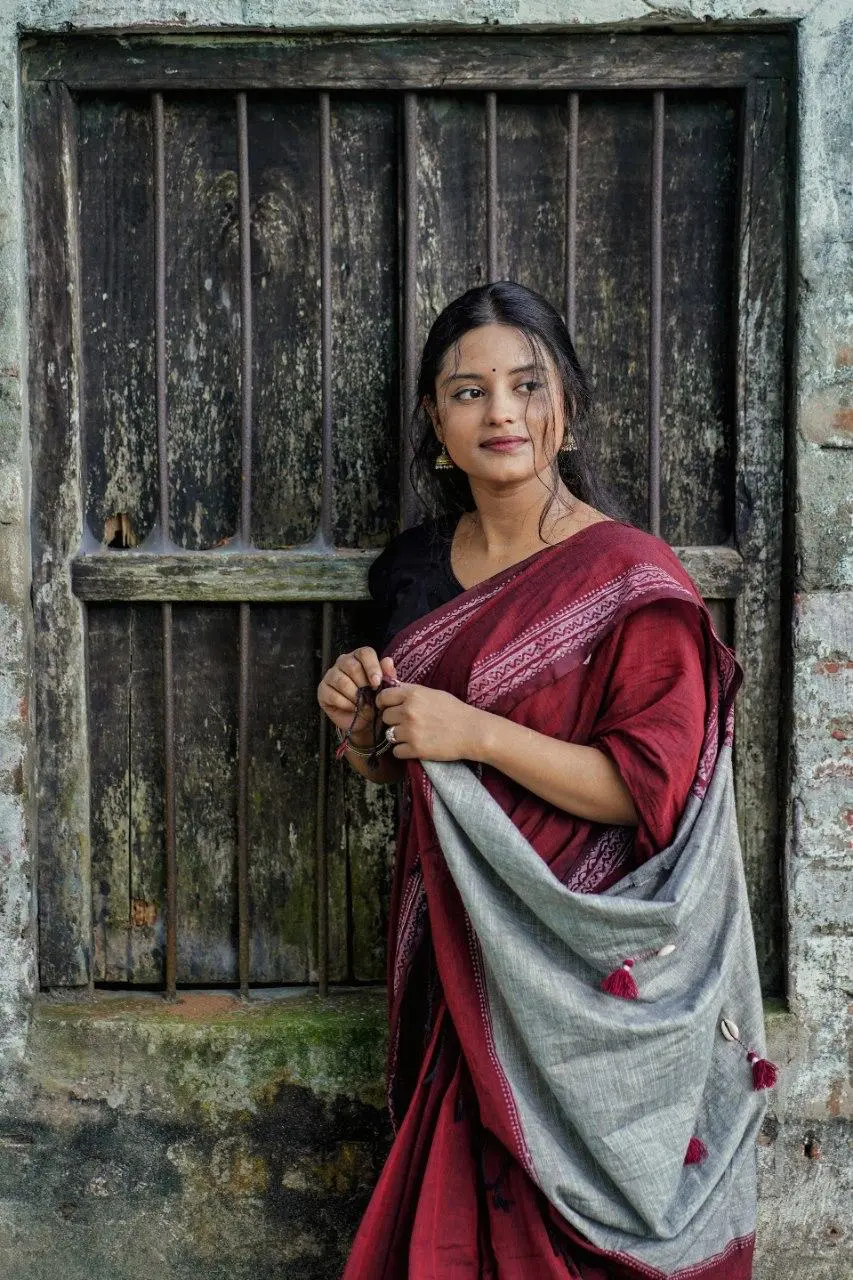
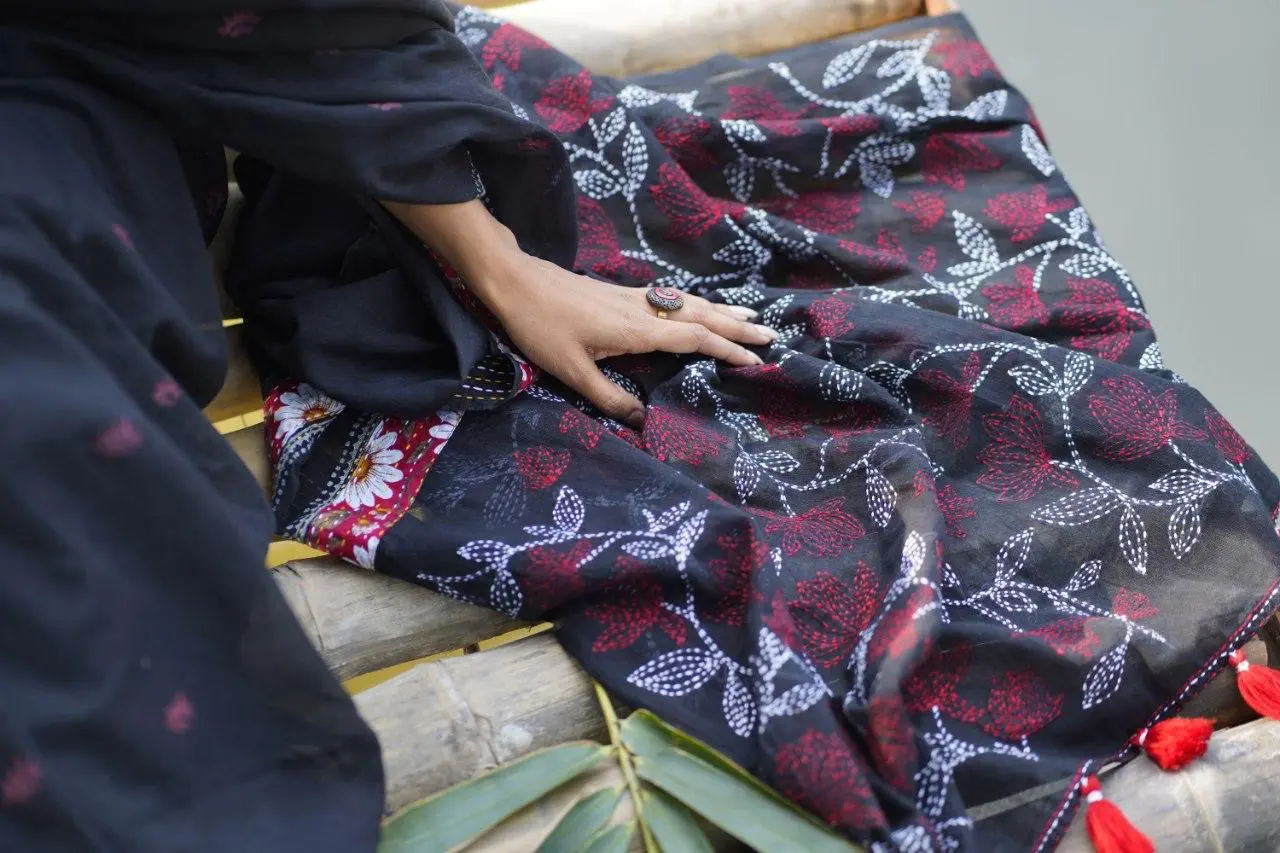
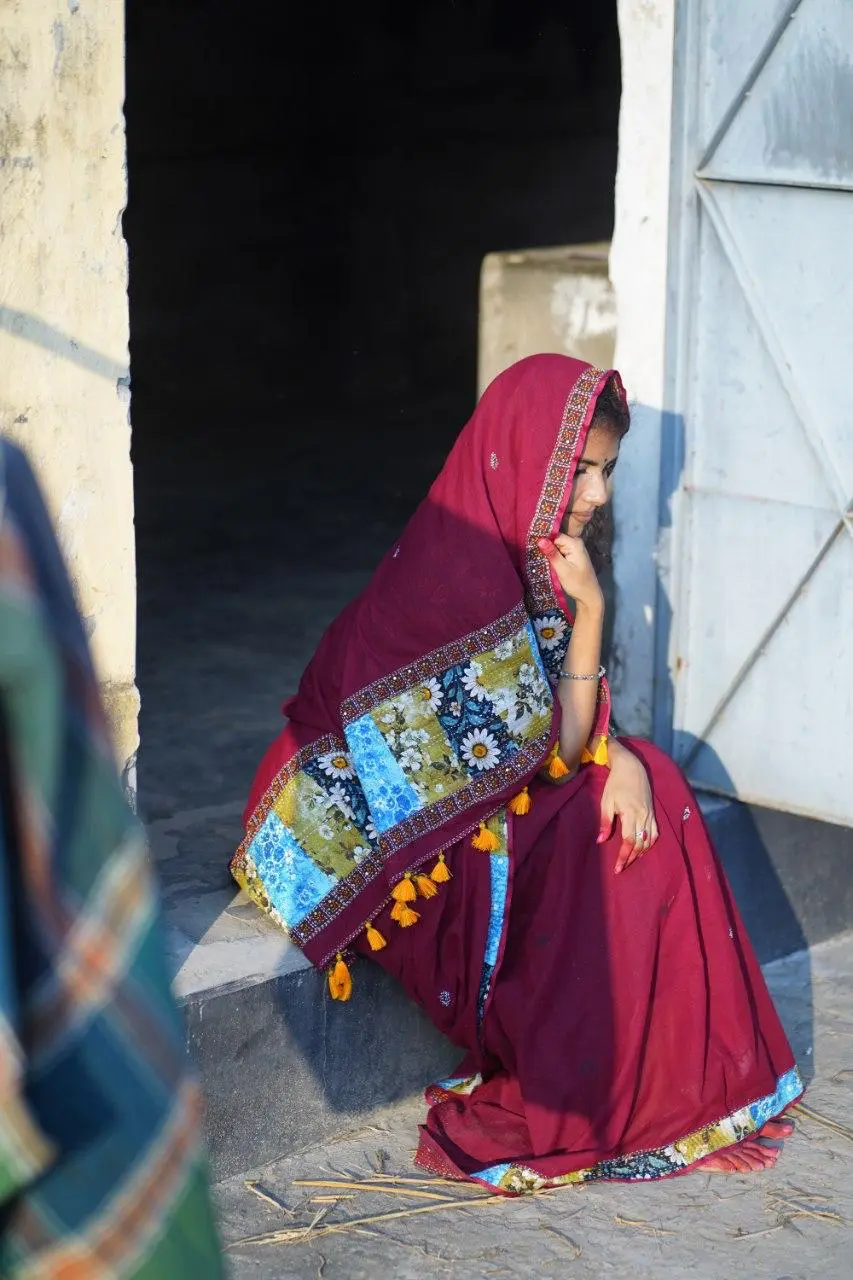
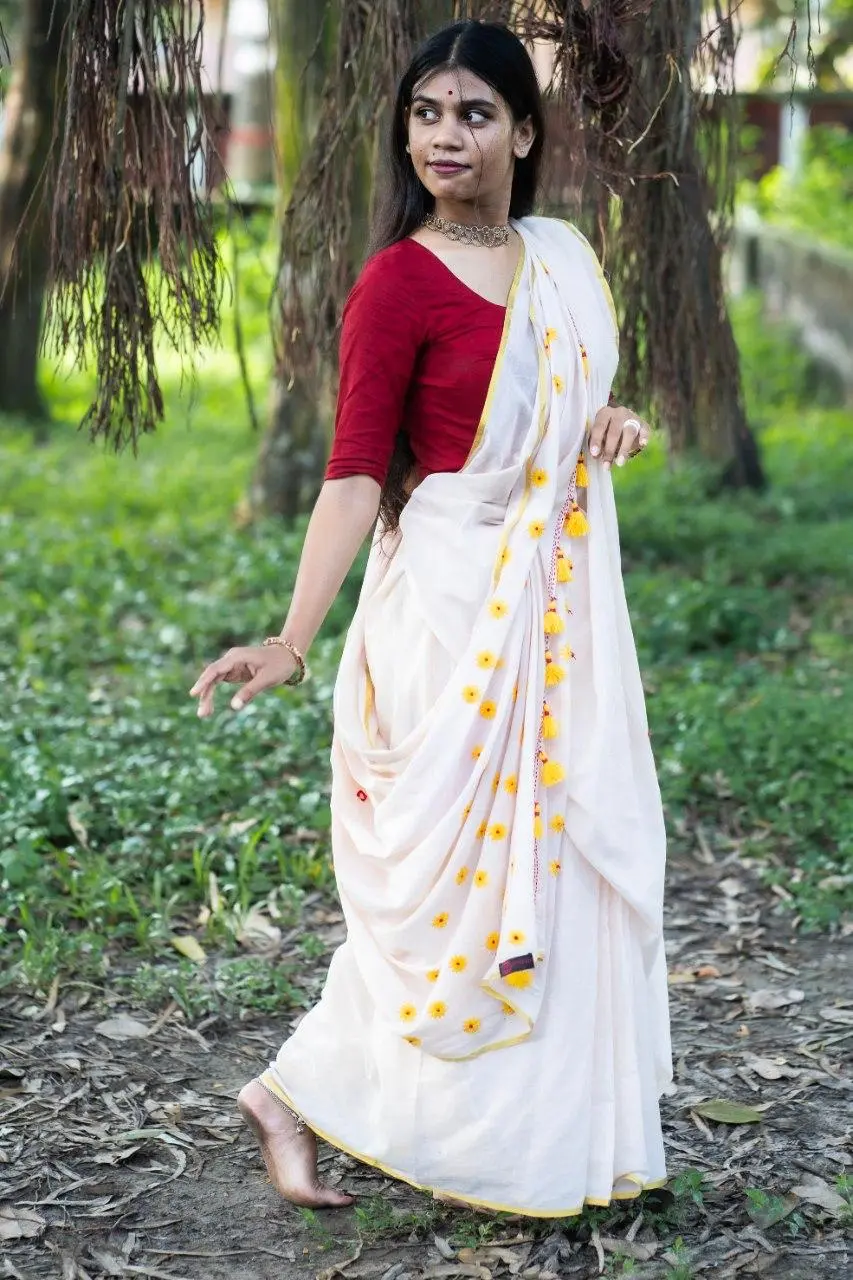
A black Tangail cotton saree with a hand-stitched aanchal, and a maroon and an off-white cotton saree, all by Boshon:
If you stitch or weave sarees yourself, you can sell clothing on JADUZ.