
 Only 2 left
Sell on JADUZ
Sell handmade clothing and sarees online in Bangladesh
Embroider, block-print, paint or weave your own clothes? Sell hand-stitched, block-printed and hand-painted sarees, kurtis and panjabis, and handwoven jamdani and handloom, on JADUZ. You set the price, JADUZ finds the buyer, and Pathao collects each sold piece from your door.
Apply in 5 minutesFree to join · You set the price · Cash on delivery across Bangladesh
JADUZ is a curated online marketplace where Bangladeshi makers can sell handmade sarees, kurtis, panjabis, jamdani and handloom. Joining and listing are free, Pathao collects sold pieces from the maker's door, buyers pay cash on delivery, and makers withdraw to bKash, Nagad or a bank. Fashion houses say Eid-ul-Fitr brings over half their annual sales (Dhaka Tribune, April 2026).
The clothing and sarees market in Bangladesh
- Fashion house entrepreneurs say Eid-ul-Fitr "covers more than half" of their annual sales, and Pohela Boishakh about 25% (Dhaka Tribune, April 2026)
- The Bangladesh Shop Owners Association estimated about ৳1,70,000 crore of business before Eid-ul-Fitr 2024, ৳37,400 crore of it on clothes (The Daily Star, April 2024)
- About 50–60% of the year's panjabi sales come around Ramadan and Eid, and with Pohela Boishakh and weddings about three-quarters fall in a few periods. A medium-quality panjabi costs ৳500–৳900 to make and sells for ৳1,000–৳2,000 retail, or ৳2,000–৳5,000 and more under a brand (The Business Standard Bangla, March 2026)
- Jamdani saris from Rupganj sell for ৳2,000 to ৳2 lakh depending on quality and design. The Friday haat at Jamdani Palli sells ৳20–25 lakh of jamdani a week, a BSCIC official said, and about ৳100 crore is traded each Eid season (Bangla Tribune, October 2026)
- At Dhaka's Dhanmondi Hawkers Market, a 40-count jamdani sold for ৳2,500–৳5,000 and an 80-count for ৳8,000–৳17,000, while 100-count half-silk started at ৳20,000, some above ৳1,00,000. The same report put machine-made imitations at ৳650–৳1,500 (Prothom Alo, November 2024)
- In Tangail, a power loom makes 8–10 saris a day, while a fine handloom saree takes at least two days. A weaver was paid ৳700 for a half silk and ৳2,500 for a jamdani, and the area's looms fell from about 5,000 to 450 (Dhaka Tribune, October 2026)
- UNESCO inscribed the traditional saree weaving art of Tangail as intangible cultural heritage of humanity in December 2025 (UNESCO, December 2025)
- Block-print shops at Bonolota Supermarket, next to New Market in Dhaka, charged ৳300–৳800 to block-print a saree, ৳350–৳700 a three-piece, ৳100–৳350 a panjabi and ৳150–৳500 a kurti before Eid (Prothom Alo, April 2024)
- About 40,000 women in Rangpur division do ornamental stitching on sarees and three-pieces ahead of Eid, and craftswomen in Syedpur earn about ৳10,000 a month, rising to ৳20,000 before Eid-ul-Fitr (The Financial Express, April 2022)
- In a BBS survey for 2024–25, clothing, footwear and sporting goods were the most-bought items online, at 70.3%, and 86.8% of online shoppers paid cash on delivery (BSS, June 2026)
- Among clothing searches in Bangladesh, "tangail half silk saree price" ranks highest in Google's suggestions, ahead of "jamdani saree price in bangladesh", "how to paint a saree" and "dhakai jamdani price in bangladesh". That is suggestion rank, not search volume (Google Autocomplete collected by JADUZ, secondary, October 2026)
On JADUZ now
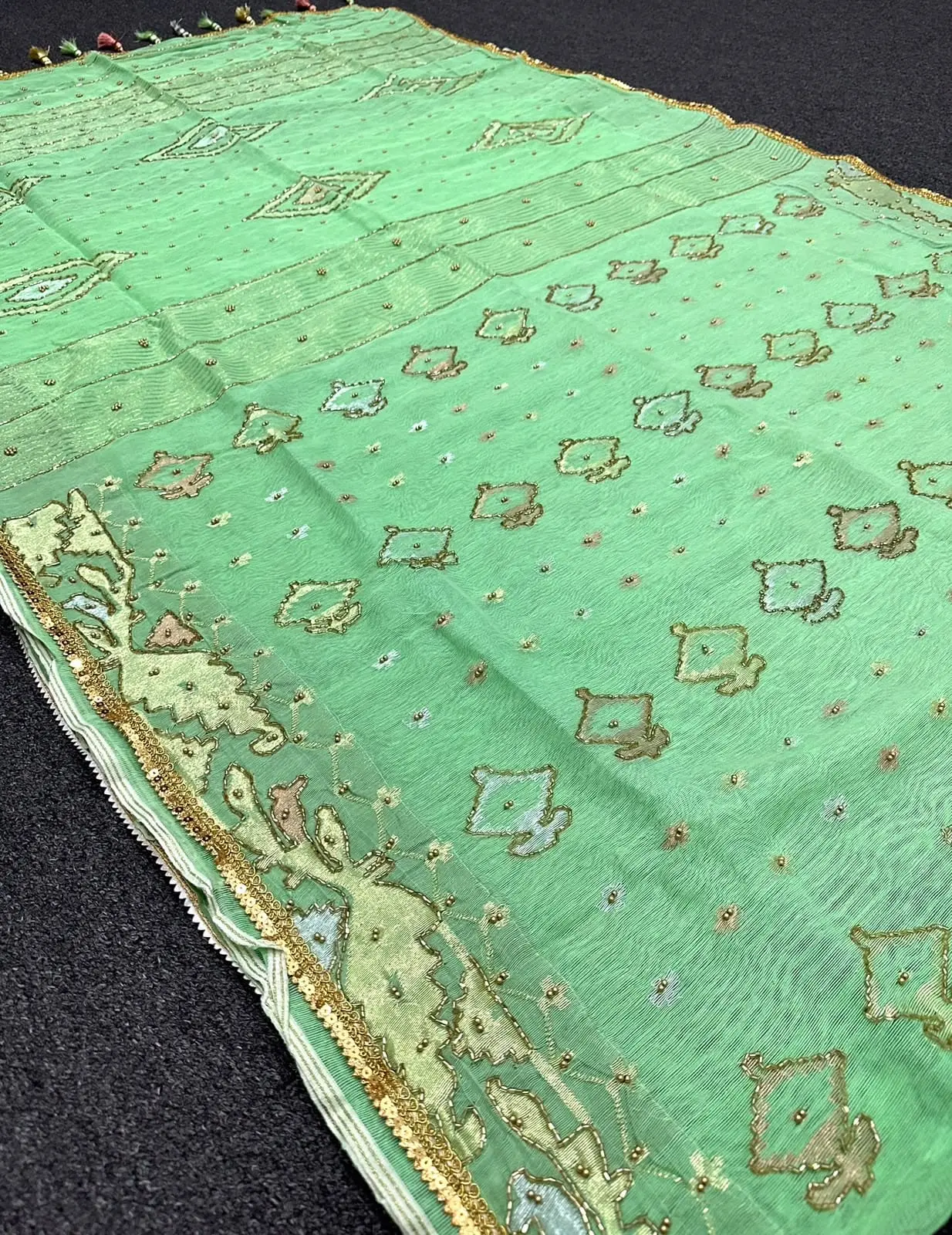
20 handmade pieces are live on JADUZ right now.
Only 2 left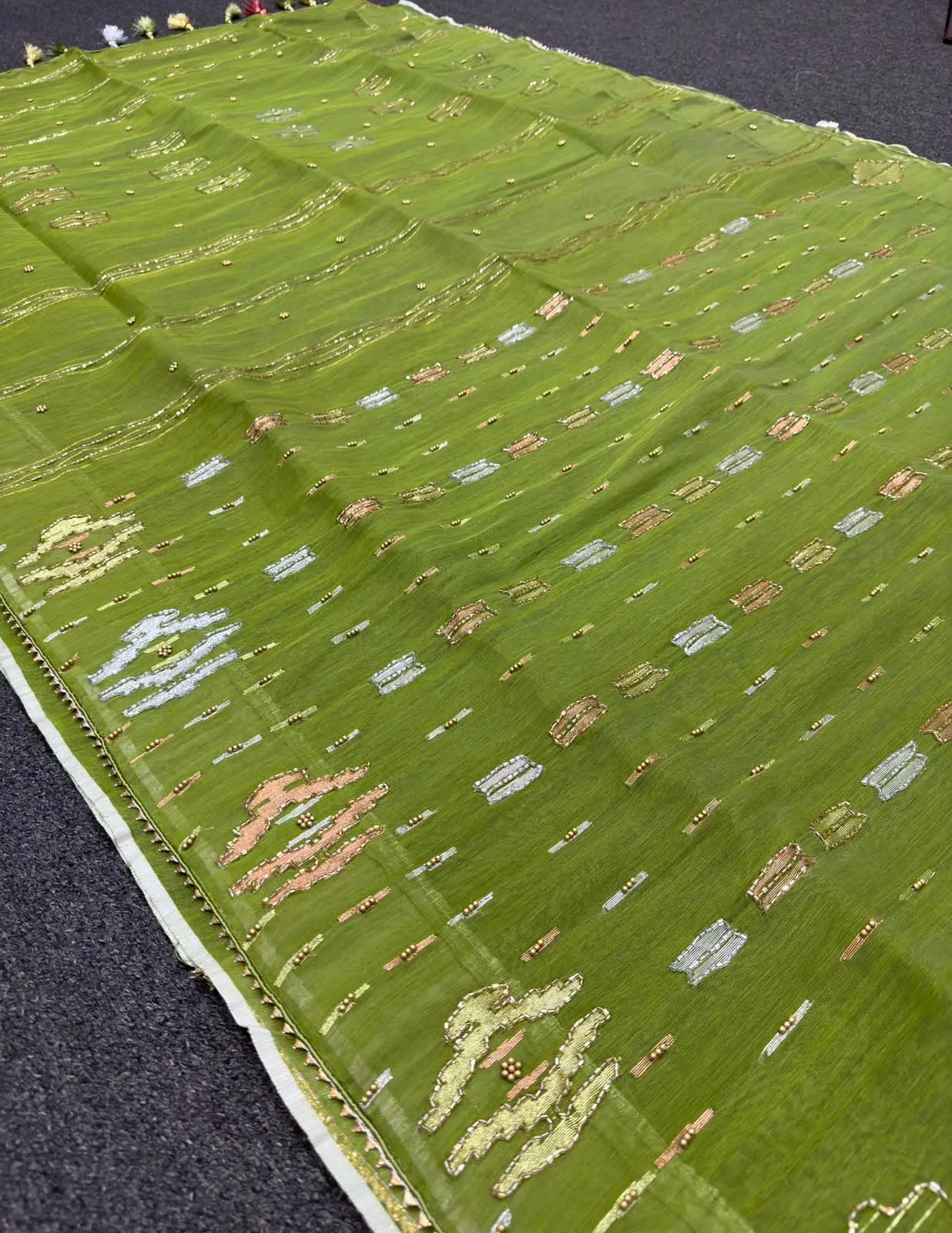 Only 2 left
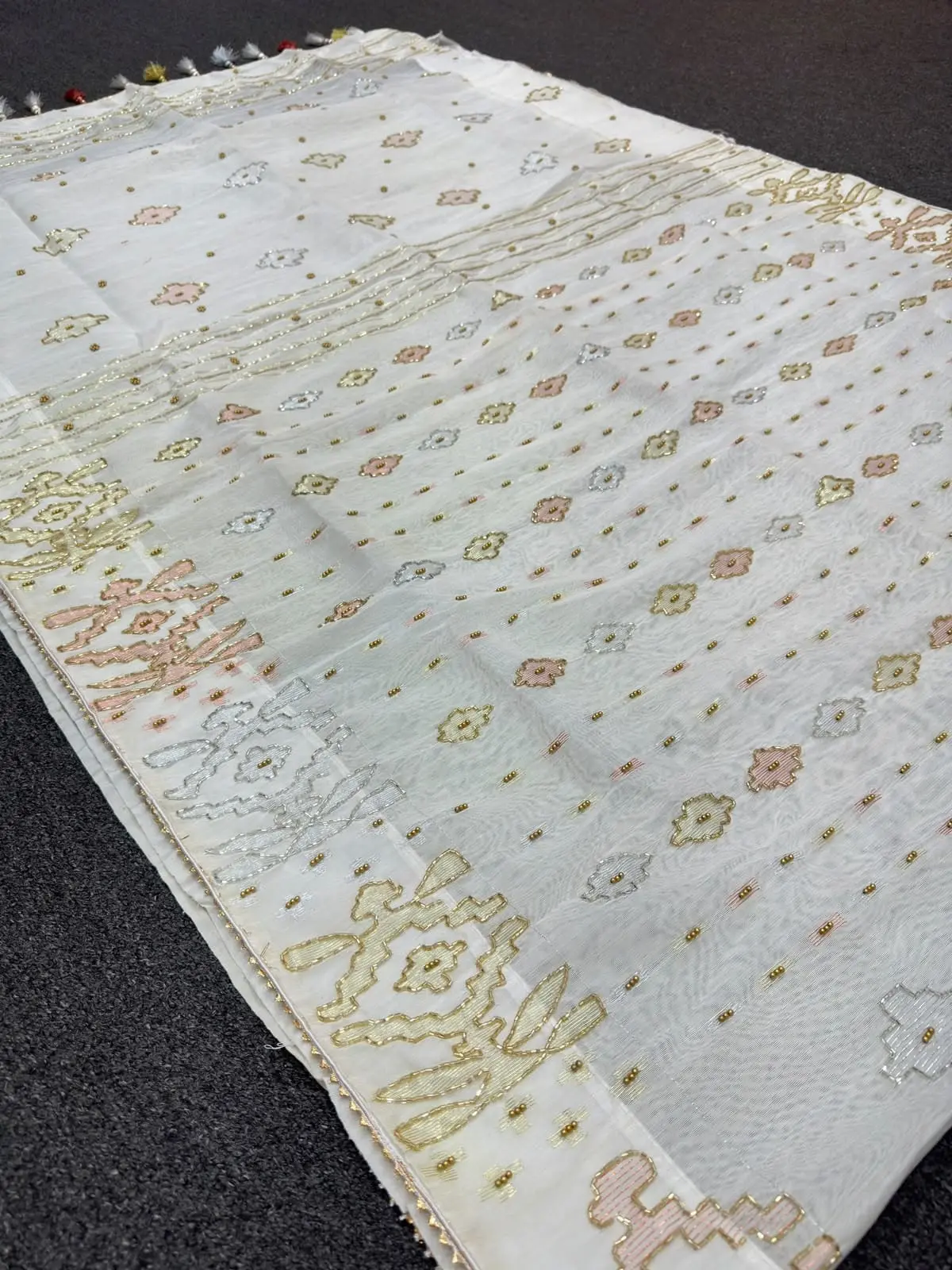 Only 2 left
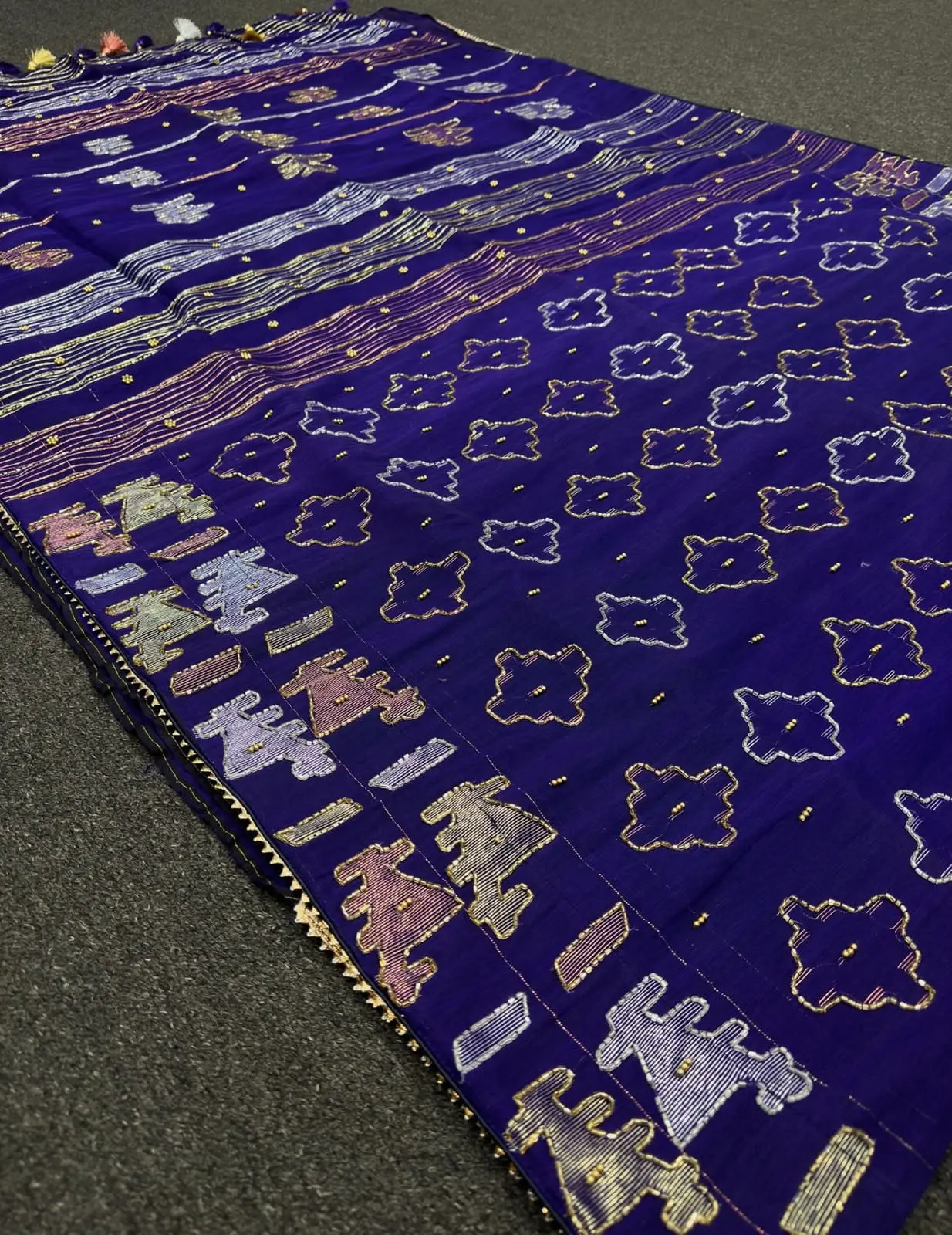 Only 3 left
Made by: Hima's Glitter Garden
How selling clothing and sarees works on JADUZ
Every maker follows the same path from order to money:
- An order comes in
- You accept and pack it
- Pathao picks it up
- The buyer pays cash
- Your earning reaches your wallet
- Withdraw to bKash, Nagad or bank
Listing, photos and packing
- Fill the size chart for every size, in inches: chest measured flat and doubled, shoulder, sleeve and length. Say these are garment measurements, not body measurements, and add the fit: regular, loose or fitted. For free size, give the largest chest it fits.
- For a saree, give the length in metres and the width in inches, and say whether the length includes the blouse piece. Describe the border width, the anchal, the weight in grams, and whether the fall and pico are done.
- For a kurti, give the cut, the slit length and the neck depth; for a panjabi, the collar, placket, buttons and pockets. Check light colours and white cotton in daylight before you say they aren't see-through, and say whether a dupatta or pyjama is included.
- Name the handwork exactly (hand embroidery, kantha stitch, appliqué, hand block print, hand painting, batik or tie-dye) and where it is on the garment. Say that the seams are machine-stitched when they are; that's normal and fine.
- Call a saree "handwoven jamdani" only when the motifs are woven by hand on a handloom; a power-loom or printed copy is "jamdani-style". Say "Tangail" only for a saree woven there, and don't claim certification or heritage status you can't show.
- Say whether the fabric was pre-washed and whether it may shrink or bleed. Don't write "pure cotton", "pure silk" or "100% handloom" unless you know it, or "selling fast", "only 2 left" or an "Eid offer" without a real price change.
- Photograph in daylight with true colour: the whole piece, a close-up of the handwork, the back of a jamdani, which shows the weave, and the piece worn. A buyer who receives a different colour from the photo refuses the parcel.
- Fold each piece with tissue, seal it in a clear bag against damp, then put it in a mailer bag. Photograph each sealed parcel before handover.
- JADUZ accepts clothes you make, embroider, print or weave yourself or in your own workshop. Sarees bought from weavers or wholesalers to resell, factory clothing and copied designs are refused.
Where to sell clothing and sarees in Bangladesh
| Your Facebook page | Daraz | JADUZ | Aarong | |
|---|---|---|---|---|
| Cost to join | Free to open a page. Facebook and Instagram Shops aren't available in Bangladesh (Meta). | No listing fee. Sign up with your NID and a bank cheque; approval comes after Daraz checks your documents (Daraz, checked October 2026). | Free to join and list. A curator reviews your work and approves each piece before it goes live. | Apply through Aarong's "Become a producer" form. Aarong says it works with over 700 producers (Aarong, checked October 2026). |
| Fees when you sell | No fee per sale. Boosting a post costs money. | Commission by category on the tax-inclusive price (Daraz), plus a 2.69% payment fee before tax (secondary, October 2026). | A small commission per sale, none on delivery (Maker Terms). | Set by your agreement with Aarong. |
| Who finds the buyers | You do, with posts, replies and boosts. e-CAB counted 2–2.5 lakh f-commerce pages, about 60,000 with regular sales (July 2024). | Daraz brings buyers you couldn't reach alone. | JADUZ markets your pieces in its shop, gift guides and Journal, in English and Bangla. | Aarong buys from you and sells your work under the Aarong name. |
| Delivery | You book a courier. Pathao charges ৳60 inside Dhaka and ৳110 outside for up to 0.5 kg, plus 1% of the cash collected (Pathao, May 2026). | You pack each order and hand it over; Daraz delivers and may charge a pickup fee (Daraz). | Pathao picks up each parcel from your door. No trips to a courier office. | You supply Aarong as agreed; Aarong sells to its own customers. |
| How you get paid | The buyer pays the courier in cash; Pathao's merchant terms promise next-day payment (Pathao, July 2022). | Weekly payouts, no sooner than 7 days after delivery (Daraz, December 2024). | The buyer pays cash on delivery; you withdraw to bKash, Nagad or bank. | On the payment terms you agree with Aarong. |
Every rule is written down in the Maker Terms.
More options, compared in full: Where to sell handmade products in Bangladesh.
Good to know
Where can I sell sarees online in Bangladesh?
Bangladeshi makers sell sarees online through their own Facebook or Instagram page, marketplaces such as Daraz, by supplying Aarong as a producer, and on JADUZ, a curated marketplace for handmade work. On JADUZ, joining and listing are free, Pathao collects each sold saree from your door, and the buyer pays cash on delivery.
Can I sell sarees I buy from weavers?
No. JADUZ lists clothes made by you or in your own workshop, so jamdani or Tangail sarees bought from weavers to resell aren't accepted. You can list a saree you weave yourself or in your own workshop, or a plain saree you embroider, block-print or paint yourself: name that handwork and say the plain saree was bought in.
My kurti is machine-stitched with hand embroidery. Can I sell it as handmade?
Yes, as long as you say which parts are by hand. Seams sewn on your own machine are normal: name the handwork, such as "hand embroidery on the yoke", and write that the seams are machine-stitched. A kurti that is fully machine-embroidered or printed in a factory isn't accepted.
Can I sell hand-painted sarees on JADUZ?
Yes. Sarees you paint by hand yourself can be listed on JADUZ. Name the fabric and the paint, say whether the colours are fixed and how to wash the saree, and add a close-up of the brushwork. A printed saree is never called hand-painted.
When do clothes sell most?
Around Eid-ul-Fitr. Fashion house entrepreneurs say it covers more than half of their annual sales, and Pohela Boishakh about 25% (Dhaka Tribune, April 2026). For panjabis, about 50–60% of the year's sales come around Ramadan and Eid (The Business Standard Bangla, March 2026). List festival pieces early, so buyers can order and receive them in time.
How do I give sizes so a panjabi or kurti isn't refused?
Give garment measurements in inches for every size: chest measured flat and doubled, shoulder, sleeve and length, plus the fit. Say these are garment, not body, measurements, because a size 38 or 42 means different things to different makers. The buyer checks the piece at the door, so a clear size chart helps avoid a refused parcel.
Sources
- Dhaka Tribune, The shifting economy of Pohela Boishakh (14 April 2026)
- The Daily Star, Economics of Eid (5 April 2024)
- The Business Standard Bangla, রমজানের তৃতীয় সপ্তাহে জমে উঠেছে পাঞ্জাবির বাজার (6 March 2026)
- Bangla Tribune, এক শাড়ির দাম ২ লাখ টাকা, ব্যাগে করে এনে বিক্রি হয় হাটে (4 October 2026)
- Prothom Alo, জামদানির দামে কেন এত তারতম্য (12 November 2024)
- Dhaka Tribune, Tangail handloom industry fights for survival (10 October 2026)
- UNESCO, Traditional saree weaving art of Tangail (2025)
- Prothom Alo, ঈদের কাপড়ে ব্লক করাবেন কোথায় (3 April 2024)
- The Financial Express, 40,000 Rangpur women busy with ornamental stitching ahead of Eid (28 April 2022)
- BSS, Dhaka leads online shopping as 14.4pc internet users purchase goods, services online (2 June 2026)
- Meta Business Help, Shops eligibility and supported countries
- The Business Standard, Facebook restriction keeps F-commerce entrepreneurs at bay (29 July 2024)
- Daraz, Sell on Daraz (help page)
- Daraz Blog, Guide to become a Daraz seller (updated 9 January 2024)
- Daraz University, Marketplace Agreement (12 December 2024)
- WinningSeller, Daraz seller account and commission (updated 14 October 2026)
- Pathao Help, Delivery charge inside or outside the city (21 May 2026)
- Pathao, Merchant terms of service (25 July 2022)
- Aarong, Become a producer (checked October 2026)
Sell something else?
Ready to show your craft to more buyers?
The application takes about 5 minutes. Keep your NID and 5 photos of your work ready.
Apply in 5 minutes