
Guide
Handloom saree types in Bangladesh, and what each one costs
11 min read
Key takeaways
Bangladesh has no official count, but its handloom sarees fall into six families: Dhakai jamdani, Tangail, Mirpur katan, Rajshahi silk, Pabna-Sirajganj cotton tant and Manipuri. Cotton tant starts around ৳400 and Tangail half silk at ৳1,000. Rajshahi silk ran ৳3,000–৳32,500 in 2026, and fine jamdani passes ৳1 lakh. Priced below the weaver's cost, it's a copy.
On this page10
- How many types of handloom saree are there in Bangladesh?
- Dhakai jamdani: the finest weave, and the most copied
- Tangail saree: the best value in handloom
- What is a katan saree, and what does a Mirpur katan cost?
- How much is a Rajshahi silk saree?
- What does a cotton tant saree from Pabna or Sirajganj cost?
- How much is a Manipuri saree?
- Which handloom saree should you buy?
- How do you know a saree is really handloom?
- Can you buy these sarees on JADUZ?
How many types of handloom saree are there in Bangladesh?
There is no official count, and every weaving district has dozens of its own trade names. For a buyer, though, Bangladeshi handloom sarees fall into six families: Dhakai jamdani, the Tangail saree, Mirpur katan (the saree older people still call Benarasi), Rajshahi silk, the cotton tant of Pabna and Sirajganj, and the Manipuri saree of Moulvibazar. Cumilla's khadi is a smaller seventh. Each one belongs to a place, and five of the six, plus khadi, are registered geographical indication (GI) products. Sirajganj's GI covers its lungi and gamcha, not its sarees.
The short answer on price: cotton tant from about ৳400, Manipuri from about ৳1,250, Tangail half silk ৳1,000 to ৳3,000, Rajshahi silk ৳3,000 to ৳32,500, a pure Benarasi from about ৳4,000 to a lakh, and jamdani from ৳2,500 to well over ৳1 lakh. The table has the year for each figure.
Bangladeshi handloom sarees compared
| Saree | Where it's woven | How to recognise it | Price, with year |
|---|---|---|---|
| Dhakai jamdani | Rupganj, Narayanganj | Motifs inlaid by hand; the back looks almost like the front | ৳2,500 (40-count) to over ৳1 lakh (100-count), 2024 |
| Tangail | Pathrail and nearby villages, Tangail | Cotton or half silk; Tangail jamdani has woven motifs | Half silk ৳1,000–৳3,000; Tangail jamdani ৳1,500–৳5,500, 2026 |
| Mirpur katan (Benarasi) | Benarasi Palli, Mirpur, Dhaka | Heavy silk with dense gold or silver zari work | Katan ৳1,000–৳10,000 and Benarasi ৳5,000–৳30,000 at one shop, 2024; up to a lakh, 2026 |
| Rajshahi silk | BSCIC area, Rajshahi | Named by the silk: soft, endi, tussar, muslin, balaka | ৳3,000–৳32,500, 2026 |
| Pabna and Sirajganj tant | Belkuchi, Shahjadpur and Chauhali in Sirajganj, and Pabna | Plain cotton body, buti motifs, or a jacquard border | ৳400–৳3,000, 2025 |
| Manipuri | Kamalganj and Sreemangal, Moulvibazar | Light cotton, bright motifs, woven by two women on one loom | From ৳1,250 (2024); a ৳5,000–৳6,000 saree sells for ৳10,000–৳12,000 in Dhaka (2023) |
| Cumilla khadi | Cumilla | Sturdy cotton with fast colours | ৳750–৳1,800, 2025 |
| Machine-made copy | Anywhere | Perfectly even, often synthetic | ৳650–৳1,500 for a jamdani look-alike, 2024 |
Dhakai jamdani: the finest weave, and the most copied
Jamdani was Bangladesh's first GI product, registered in 2016. Two weavers inlay every motif by hand, which is why the price climbs so steeply with the fineness of the yarn. In Prothom Alo's November 2024 survey, a 40-count cotton cost ৳2,500 to ৳5,000, a 60/80-count ৳4,000 to ৳10,000 straight from the weavers in Rupganj, and a fine 100-count ৳20,000 to ৳1 lakh. Machine-made copies sold for ৳650 to ৳1,500.
We've covered jamdani in depth elsewhere: the jamdani saree price guide breaks prices down by count and by where you buy, and how to identify original jamdani gives seven checks, starting with turning the saree over. JADUZ's Jamdani craft guide explains the weave itself.
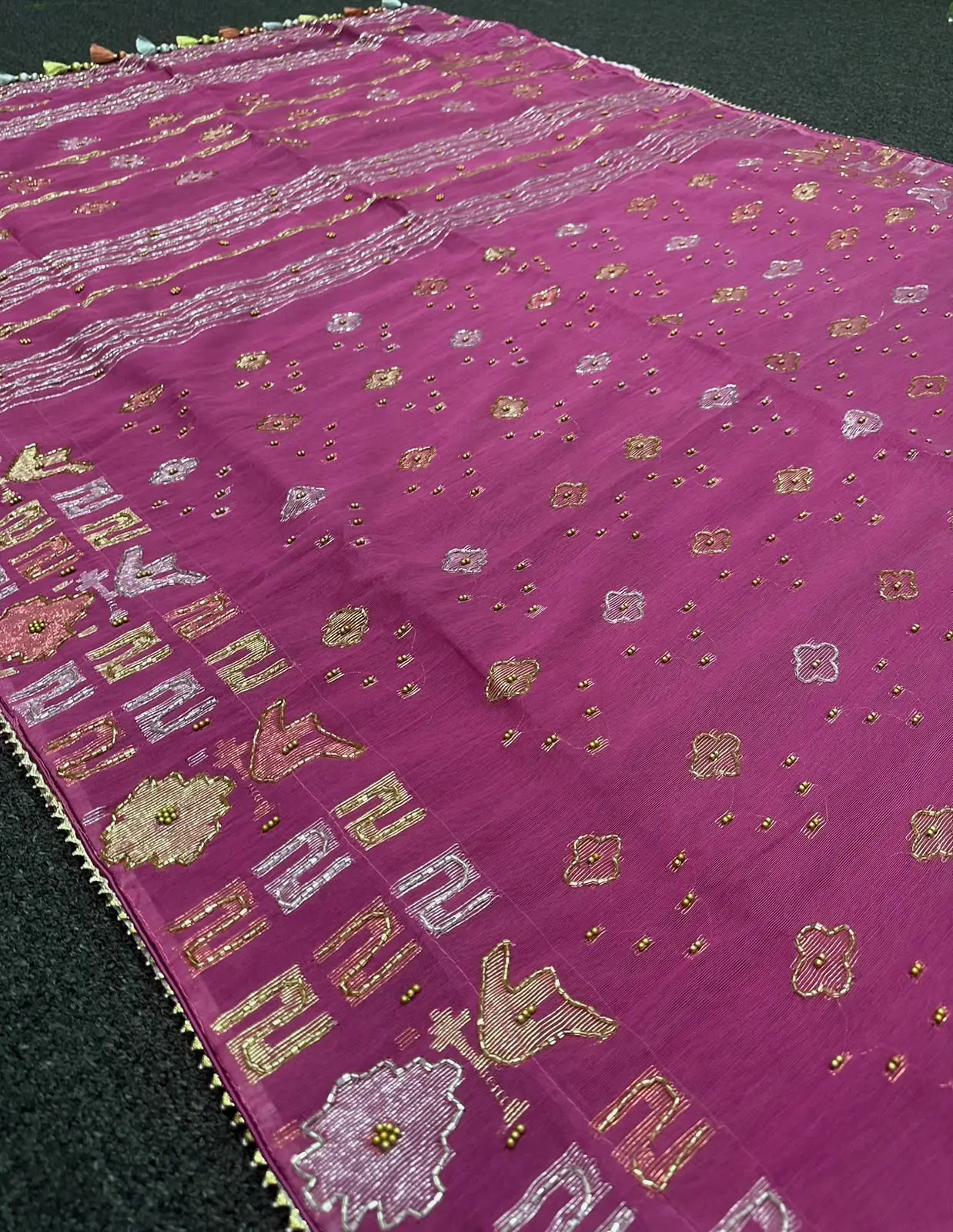
On JADUZ, a pink half silk jamdani saree with a blouse piece:
Tangail saree: the best value in handloom
If you're buying your first handloom saree, start here. In Pathrail during the October 2026 Puja market, Prothom Alo found half silk selling for ৳1,000 to ৳3,000, Tangail jamdani for ৳1,500 to ৳5,500, and bead-worked kardana jamdani wholesaling at up to ৳12,500. Plain Tangail tant starts around ৳500, The Financial Express noted in August 2024. Bangladesh recognised the Tangail saree as a GI product on 7 February 2024.
Not every Tangail saree is handwoven any more. Our Tangail saree price guide covers the loom question, the haats and six checks before you pay.
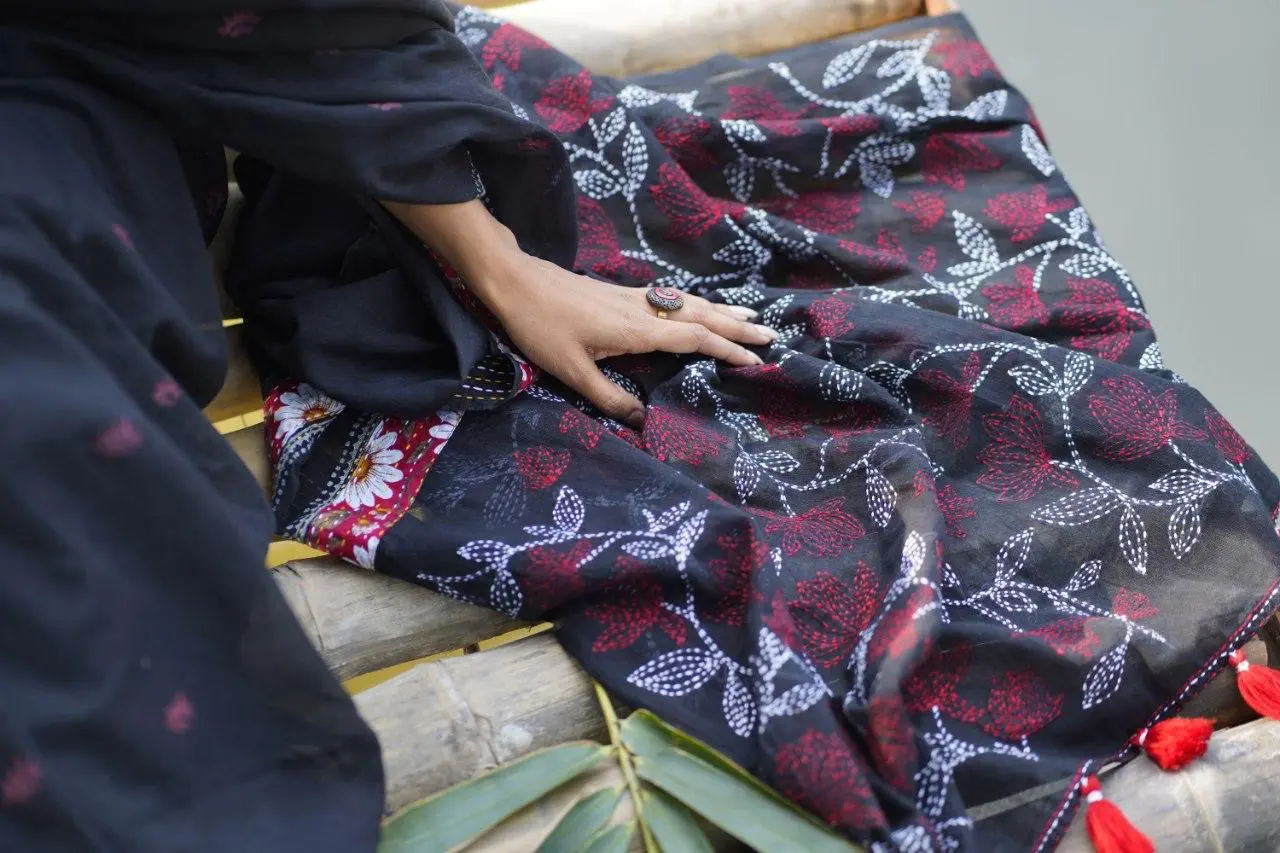
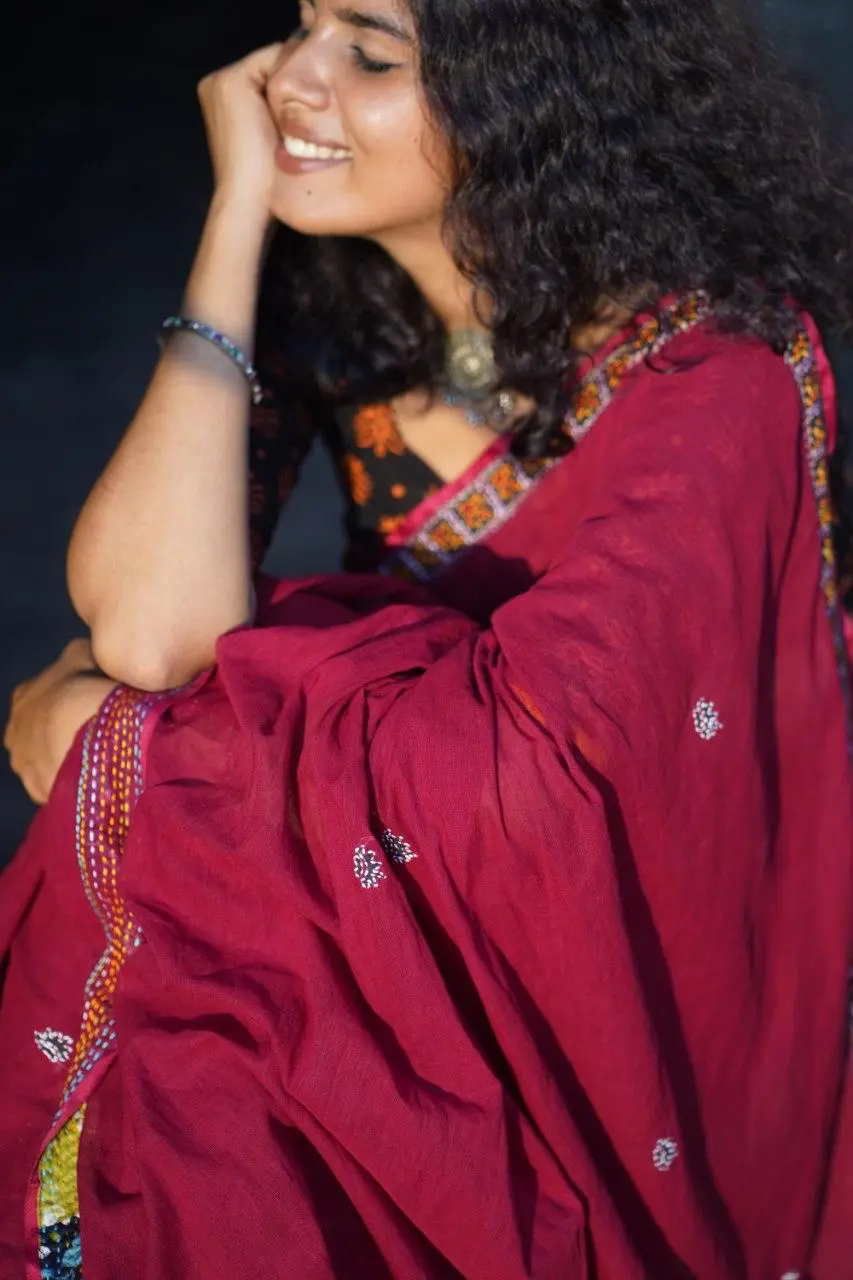
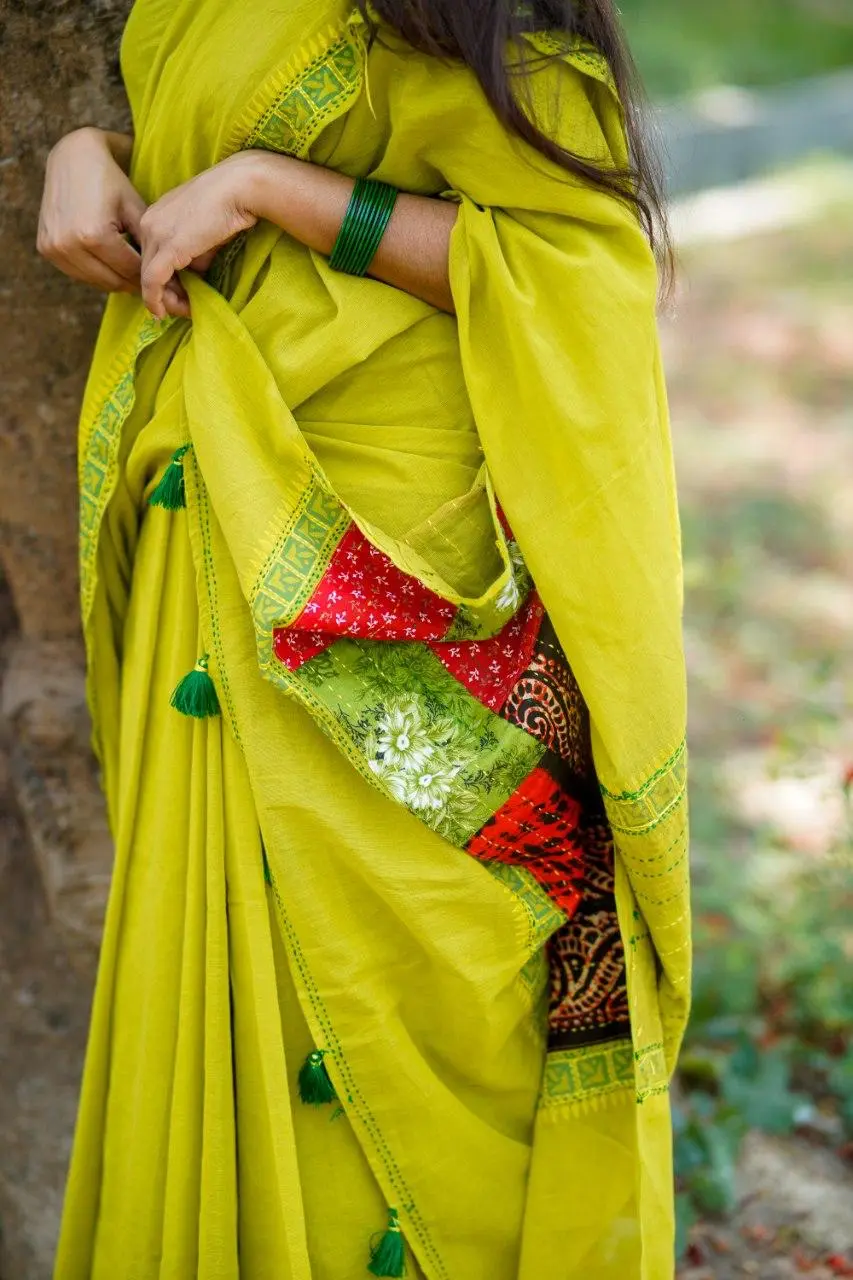
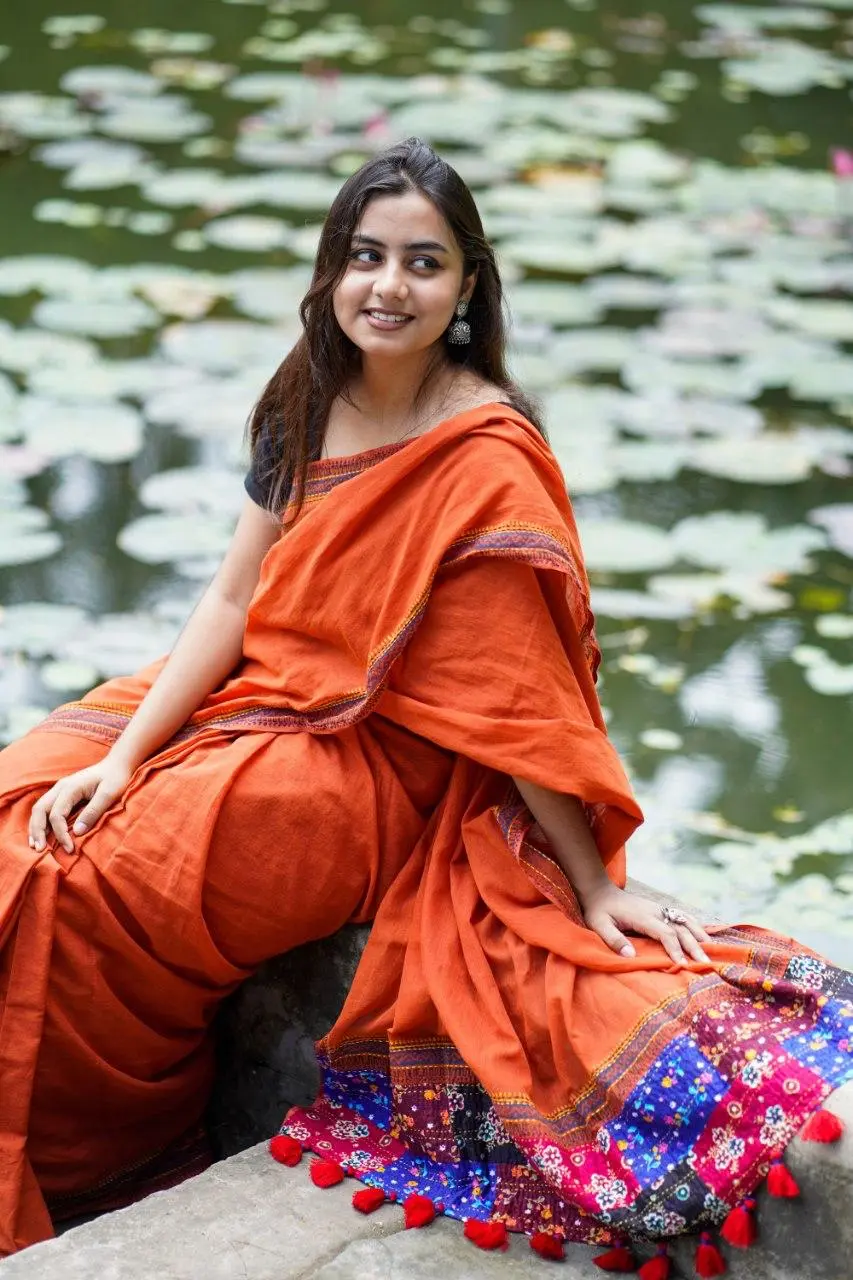
These Tangail cotton sarees are finished with hand stitching and patchwork by the JADUZ maker Boshon:
What is a katan saree, and what does a Mirpur katan cost?
In Bangladesh, katan is the name for a silk saree with heavy zari work, the gold or silver thread, and the Mirpur katan is the home-grown one. Its weavers came from Benaras in India after partition in 1947 and settled in Mirpur, which is why older buyers still call it Benarasi. The Daily Star found them in May 2025 working treadle looms in tin-shed rooms, with a punch-card master cutting the cards that guide each motif. Mirpur katan was certified as a GI product in April 2025.
What it costs. Prices in the Palli swing widely:
- One shop, March 2024: katan from ৳1,000 to ৳10,000 and Benarasi from ৳5,000 to ৳30,000, the manager of Naz Benarasi told Barta24. He added that the shop had moved its looms out of Mirpur to Narsingdi and Tangail to cut costs.
- Before Eid, March 2026: a regular buyer told bdnews24 that a pure Benarasi usually costs ৳4,000 to ৳5,000, that shops were asking ৳6,000 to ৳7,000, and that he settled at ৳5,500. Another shop stocked saris from ৳5,000 up to a lakh.
- Across the market: Jago News counted about 200 shops near Mirpur 10 in March 2026, selling jamdani, Tangail, Rajshahi silk, katan, kota and Kanjivaram, mostly for ৳1,500 to ৳10,000.
Why a cheap "Mirpur katan" deserves questions. Silk thread is the main cost. Resham that Mirpur weavers once bought at about ৳1,200 a kilo now costs nearly ৳10,500, and a local designer told The Daily Star that one fully woven Mirpur katan costs ৳70,000 to ৳80,000 to make. That can't be squared with a ৳3,000 "pure katan". The likely answer is that much of what the Palli sells is lighter, part-synthetic or woven elsewhere. Back in 2014, shop owners told Prothom Alo that 60% of their saris came from India, and in 2025 Mirpur's weavers were still complaining that Indian saris are sold as Bangladeshi.
So ask three things: was it woven in Mirpur, is it pure silk, and is the zari real? Our jamdani checklist has a quick zari test that works on katan too. For a bride's katan, expect a five-figure price and ask the shop to write "Mirpur handloom, pure silk" on the receipt.
How much is a Rajshahi silk saree?
Rajshahi silk is sold by the kind of silk, and the kind sets the price. At Rajshahi's Sapura Silk showroom in late September 2026, Prothom Alo recorded:
- Soft silk: ৳3,000–৳7,500
- Raw silk, hand printed: ৳3,550–৳6,500
- Endi silk: ৳3,850–৳7,950
- Tussar silk: ৳8,800–৳19,200
- Muslin silk with embroidery: ৳9,500–৳32,500
- Balaka silk with stitching: ৳17,000–৳28,000
- Tussar with embroidery: ৳19,500–৳32,500
Jago News added in October 2026 that plain balaka silk starts at ৳2,000 (৳6,000 to ৳8,000 with thread and zari work), vegetable-dyed silk costs ৳4,700 to ৳13,800 and light matka silk starts at ৳5,000.
What "Rajshahi silk" really means. It's a GI product, but the name tells you where the cloth was woven, not where the silk was grown. New Age reported in March 2026 that most of the 20 or so factories in Rajshahi's BSCIC area weave imported yarn: the country makes about four tonnes of fine silk yarn a year against a demand of around 400, so about 350 tonnes come from China and India. Showrooms even sell a "cheap katan" next to their katan. The government's Rajshahi Silk Factory, run by the Sericulture Development Board, sells only local silk at somewhat higher prices, and it weaves on power looms. If silk grown in Bangladesh matters to you, buy there. If you want a soft, wearable silk saree, a soft or endi silk at ৳3,000 to ৳8,000 is our pick for a first one.
What does a cotton tant saree from Pabna or Sirajganj cost?
Usually ৳400 to ৳3,000. That's the range of the Sirajganj saris bought by Indian traders, who have been taking them since 2010, Prothom Alo reported in April 2025. Sirajganj was once part of Pabna district, and weaving in greater Pabna grew mainly in Belkuchi, Chauhali and Shahjadpur, now in Sirajganj, and in a few parts of Pabna, never in Pabna town itself. Belkuchi alone has at least a lakh looms.
These are everyday cotton sarees. A plain one takes about six hours on the loom, and one with complex patterning several days. They come in three basic kinds:
- Plain: the design comes from the warp and weft colours alone.
- Buti: small motifs, picked up by hand or on a jacquard.
- Naksha par: a patterned border and anchal, woven on a jacquard or dobby.
The weavers name their own designs, such as nawri, teddy, gap par, jolbuta and fita par, so the same saree can turn up under three names. The yarn has widened too: alongside cotton you'll find raw silk, endi, jute and tussar, but also polyester, nylon and art silk, so ask what it's woven from. Power looms are moving into the handloom villages as well.
Buying at the haat. Shahjadpur's haat, the biggest, runs on Sunday and Wednesday, Belkuchi's on Tuesday and Wednesday and Enayetpur's on Friday. They are wholesale markets: Jago News explained in March 2026 that saris are priced by the jora (pair) and sold by the peti of six, which confuses first-time buyers. Ask whether a quoted price is for one saree or two.
Other cotton sarees. Cumilla's khadi sarees sold for ৳750 to ৳1,800 before Eid in March 2025, Bangladesh Pratidin reported, at the 400-plus khadi shops between Rajganj bazar and Kandirpar. Khadi became a GI product in 2025. On a tight budget, the saree haat under the trees at Jahangirnagar University sells Manikganj and Tangail tant from ৳450 to about ৳1,200, Jago News noted in August 2025.
How much is a Manipuri saree?
From about ৳1,250, and a saree costing ৳5,000 or ৳6,000 sells for ৳10,000 to ৳12,000 in Dhaka. The Business Standard visited Kamalganj in Moulvibazar in April 2023 and found about 5,000 handlooms in the Manipuri villages, all worked by women. Two weavers share each saree, which takes about a week. The lowest it cost a weaver to make one saree was ৳1,200 to ৳1,250, a community leader said, and exclusive pieces woven to order reached ৳20,000 to ৳22,000. The Financial Express put the starting price at ৳1,250 in August 2024.
The Manipuri saree is younger than it looks. Manipuri women don't traditionally wear sarees; they began weaving them for Bengali buyers in the 1980s, probably adapting their own innaphi shawl. The Manipuri saree of Sylhet became a GI product in April 2025, and demand rose with it. So did copying: in March 2026 traders in Moulvibazar told Amar Desh that machine-woven "Manipuri" cloth was cheating buyers.
Our advice: a handwoven Manipuri can't sell much below what the weaver spends on it, so ask questions of one priced under about ৳1,200. Buy in Kamalganj or Sreemangal, or from a seller who can name the weaver.
Which handloom saree should you buy?
- Everyday and summer: Pabna or Sirajganj cotton tant (৳400–৳3,000) or a Manipuri. Cotton breathes in the heat, and Manipuri washes easily.
- Eid, Puja and Boishakh: a Tangail half silk at ৳1,000 to ৳3,000 is the best value in handloom. For more sheen, a Rajshahi soft or endi silk at ৳3,000 to ৳8,000.
- A wedding: a Mirpur katan or a Benarasi, or an 80-count jamdani or finer. Budget five figures for either, and see our wedding gift guide if it's a present.
- A gift for someone abroad: a jamdani or a Manipuri. Both are light and fold small.
- Under ৳2,000 and you want the real thing: a Tangail jamdani or a cotton tant, not a machine-made "Dhakai jamdani".
How do you know a saree is really handloom?
No single test works for all seven, but four habits catch most fakes:
- Ask which loom. A pit loom is fully hand-worked, a Chittaranjan loom is semi-automatic and a power loom isn't handloom at all, as our Tangail guide explains. A seller who knows the weaver can tell you.
- Turn it over. Hand-inlaid motifs look almost the same on the back. Rows of cut threads behind every motif mean a machine.
- Do the cost sum. If a price is below what the yarn and the weaver's days could cost, like a ৳1,000 "Manipuri" or a ৳3,000 "pure Mirpur katan", something has been swapped.
- Ask the village and the yarn. Real sellers answer straight away.
If you can't trust your eye yet, buy from the weavers' own haats and outlets, or from a craft house with a name to protect: our guide to shops like Aarong compares them.
Can you buy these sarees on JADUZ?
Yes, a few. JADUZ is a curated marketplace for Bangladeshi makers. Its saree shop has Tangail cotton sarees with hand stitch and patchwork by Boshon, and a half-silk jamdani by Hima's Glitter Garden. Every maker is vetted for their portfolio, proof of making and identity, and every piece is approved before it goes live. If you weave jamdani in Rupganj, Manipuri in Kamalganj or tant in Belkuchi, read about selling clothing on JADUZ.