Guide
Famous painters of Bangladesh, their best works and where to see them
22 min read
Key takeaways
Bangladesh's most famous painter is Shilpacharya Zainul Abedin (1914–1976), whose 1943 famine sketches open the art galleries of the National Museum in Dhaka. The other masters most named are S. M. Sultan for his powerful village figures, Quamrul Hassan for folk-modern 'patua' painting, Safiuddin Ahmed for prints, and Mohammad Kibria and Murtaja Baseer for modernism.
On this page15
- Who is the most famous painter of Bangladesh?
- How did we choose these painters?
- Who was Shilpacharya Zainul Abedin?
- Who was S. M. Sultan?
- Why is Quamrul Hassan called "Patua"?
- Who were the other founding painters?
- Which painters led modern art in the 1950s and 1960s?
- Which Bangladeshi painters are famous abroad?
- Who are the famous women painters of Bangladesh?
- How did painting in Bangladesh develop?
- What is the most famous painting of Bangladesh?
- Where can you see famous Bangladeshi paintings?
- How can you buy original art in Bangladesh today?
- Who is the best painter in Bangladesh today?
- Which famous painting suits a home wall?
Who is the most famous painter of Bangladesh?
The most famous painter of Bangladesh is Zainul Abedin (1914–1976), known by the title Shilpacharya, "master of art". He founded the country's first art institute in Dhaka in 1948, and his ink sketches of the 1943 Bengal famine are the first exhibit in the art galleries of the Bangladesh National Museum, according to Banglapedia.
Abedin also holds the auction record for a Bangladeshi artist. An untitled ink-and-wash by him sold for US$692,048, about 82 million taka, at Sotheby's in London on 26 September 2024, the Dhaka Tribune reported. Fame is not only price, though. Banglapedia's history of painting in Bangladesh names three other painters who started the modern movement with him after 1947: Safiuddin Ahmed, Quamrul Hassan and S. M. Sultan. Those four are the names most Bangladeshis learn first at school.
Bangladesh's famous painters at a glance
| Painter | Lived | Known for | A best-known work | Where to see the work |
|---|---|---|---|---|
| Zainul Abedin | 1914–1976 | Founder of the 1948 art institute; realist ink drawing | Famine sketches (1943); Nabanna scroll (1969) | National Museum, Dhaka; Zainul Abedin Museum, Mymensingh |
| Quamrul Hassan | 1921–1988 | "Patua": folk forms in modern painting; 1971 war poster | Tin Kanya (Three Women, oil, 1983) | National Museum, Dhaka |
| Safiuddin Ahmed | 1922–2012 | Woodcuts and etchings; "Shilpaguru" | Santal and Dumka series; Threshing Paddy (1952) | Retrospectives and gallery shows |
| S. M. Sultan | 1923–1994 | Muscular farmers and village life in oil | Char Dakhal (oil on board, 1976) | S. M. Sultan Memorial Museum, Narail; National Museum, Dhaka |
| Hamidur Rahman | 1928–1988 | Murals; designed the Shaheed Minar | Public Library murals (1957–58) | Central Shaheed Minar, Dhaka |
| Mohammad Kibria | 1929–2011 | Abstract painting and printmaking | "Chhai" (Ashes) series, 1970s | Gallery and museum shows |
| Aminul Islam | 1931–2011 | Abstraction, collage and public murals | Bangladesh Bank murals (1968, 1996) | Bangladesh Bank and Janata Bank, Motijheel |
| Qayyum Chowdhury | 1932–2014 | Folk motifs and bright colour | Book covers and paintings | Gallery and museum shows |
| Rashid Choudhury | 1932–1986 | Tapestry in jute, cotton and silk | My Golden Bengal (tapestry, 1975) | Gallery and museum shows |
| Murtaja Baseer | 1932–2020 | Painter, writer; series works | Epitaph for the Martyrs (37 paintings) | Gallery and museum shows |
| Mustafa Monwar | 1935–2026 | Painter and puppetry pioneer | The red sun motif at the Shaheed Minar (co-designer) | Central Shaheed Minar, Dhaka |
| Rafiqun Nabi | born 1943 | Cartoons (Tokai), prints, painting | Tokai (since 1978) | Exhibitions in Dhaka |
| Monirul Islam | born 1943 | Printmaker based in Spain | Etchings ("Monir's School") | Exhibitions in Dhaka and Spain |
| Shahabuddin Ahmed | born 1950 | Freedom fighter; figures in motion | Freedom Fighter paintings | Exhibitions in Dhaka and Paris |
| Farida Zaman | born 1953 | River life, fish and fishing nets | Fishing Net and Sufia series | Exhibitions in Dhaka |
Dates come from Banglapedia, the Bengal Foundation and the newspapers named in each section, checked in November 2026. Women painters, from Meherbanu Khanam to Rokeya Sultana, have their own section below.
How did we choose these painters?
We didn't rank painters by taste. A painter is on this list if Banglapedia's history of painting in Bangladesh names them as a leading figure of their decade, and if a second named source (a museum page, Banglapedia's own biography, the Bengal Foundation or a national newspaper) gives their dates and work. The list is in order of birth year within each period, not in order of "best".
- Named by Banglapedia as a leading painter of the 1940s, 1950s, 1960s, 1970s or 1980s.
- Dates and works from a source you can open, cited in the list at the end.
- State honours such as the Ekushey Padak or the Independence Day Award, only where a named report confirms them.
- Work you can see in public: a museum, a monument, a mural or a regular exhibition.
Several fine painters are missing because we couldn't confirm their details from two sources this month. Banglapedia's article names many more, among them Syed Jahangir, Abdur Razzak, Devdas Chakravarty, Hashem Khan, Kazi Abdul Baset, Kalidas Karmakar and Mahmudul Huq.
Who was Shilpacharya Zainul Abedin?
Zainul Abedin (1914–1976) was the painter who started modern art in Bangladesh. Banglapedia says he was born in Mymensingh, trained at the Calcutta Government Art School from 1933, and was the founding principal of the Government Institute of Arts and Crafts in Dhaka in 1948, today the Faculty of Fine Arts of the University of Dhaka.
He grew up by the Brahmaputra, and a series of watercolours of the river won him the Governor's Gold Medal at an all-India exhibition in 1938. In 1951 he went to the Slade School of Art in London for two years, and on his return he began a "Bengali" style built on folk forms, primary colours and flat space. In 1975 he set up a folk art museum at Sonargaon and a gallery of his own work in Mymensingh. He died in Dhaka on 28 May 1976.
What are Zainul Abedin's famous paintings?
Zainul Abedin's most famous works are the Famine Sketches of 1943, drawn in Chinese ink and brush on cheap packing paper, which brought him fame across India. Banglapedia lists these as his best-known works:
- Famine Sketches (1943): the starving people of the man-made Bengal famine.
- The Rebel Crow (watercolour, 1951), the high point of his realist style.
- Painna's Mother and Two Women (gouache, 1953), from his folk-form period after London.
- Santal Couple ("Santal Jugal") and Moi Deya, in his line style.
- Nabanna (1969): a 65-foot scroll in Chinese ink, watercolour and wax, made for the 1969 mass movement.
- Manpura '70: a 30-foot scroll for the hundreds of thousands killed by the 1970 cyclone.
- Sangram (Struggle, oil, 1976), one of his last paintings.
Who was S. M. Sultan?
S. M. Sultan (1923–1994) was the painter of Bangladesh's village life, famous for farmers and fishermen with huge, muscular bodies. His full name was Sheikh Mohammad Sultan, and his family called him Lal Mia. He was born on 10 August 1923 in Masimdia village in Narail and died on 10 October 1994, Banglapedia records.
His father was a mason, and the boy started drawing the buildings his father worked on. A local zamindar paid for him to go to Calcutta in 1938, and he spent three years at the art school before leaving to work as a free artist. He showed his work in Simla in 1946 and, in 1950, in New York, Washington, Chicago, Boston and London. Then he went home to Narail in 1953 and lived there, far from Dhaka's art scene, with a house full of animals and a school for children.
Dhaka rediscovered him in 1976, when the Bangladesh Shilpakala Academy showed his new paintings. Banglapedia explains the bodies: real farmers were thin from hunger, and Sultan painted them strong, as a dream of what they could be. Among his best-known paintings are Char Dakhal (fighting over new river land; Banglapedia shows an oil on board dated 1976) and Hatyajogyo (massacre, 1987). He painted on cheap paper and jute canvas, so many of his colours are fading.
Why is Quamrul Hassan called "Patua"?
Quamrul Hassan (1921–1988) is called "Patua Quamrul Hassan" because he combined the methods of Bengal's popular folk painters, the patuas, with modern painting, Banglapedia explains. His women have long necks and doll-like eyes and noses taken from folk art, as in his best-known painting, Tin Kanya (Three Women, oil, 1983).
He was born in Kolkata on 2 December 1921, graduated in fine arts there in 1947, and came to Dhaka to found the 1948 art institute with Zainul Abedin. He started the Art Group in 1950 and ran the design centre of the small and cottage industries corporation from 1960 to 1978.
In 1971 he led the art division of the Bangladesh government in exile and drew the war's most famous poster: Yahya Khan's face with the line "Ei janoyarder hotya korte hobe", "These animals have to be killed". On 2 February 1988, while presiding over a session of the National Poetry Festival in Dhaka, he sketched a snake mocking the military ruler Ershad, and died of a heart attack minutes later. Bangladesh issued a stamp of his painting Naior in 1986, and Bangla Banglapedia says he worked on the final design of the national flag.
Who were the other founding painters?
The other founders of modern painting in Bangladesh were Safiuddin Ahmed (1922–2012), the printmaker, and, from the first students, Qayyum Chowdhury (1932–2014). The Daily Star counts Qayyum Chowdhury with Zainul Abedin, Quamrul Hassan and Safiuddin Ahmed as the country's first generation of artists.
Safiuddin Ahmed
Safiuddin Ahmed was born in Kolkata on 23 June 1922 and died in Dhaka on 20 May 2012. Bangla Banglapedia says he was given the title "Shilpaguru". He graduated from the Calcutta art school in 1942, made his name with paintings of the Santal people around Dumka, and in Dhaka headed the printmaking department of the art institute from 1948 to 1979, The Daily Star wrote in his obituary. He is best known for woodcut engraving and for deep blacks: his subjects were rural life, floods, the Language Movement and memories of 1971.
Qayyum Chowdhury
Qayyum Chowdhury (9 March 1932 – 30 November 2014) drew on folk art for his colours and motifs, and Banglapedia notes that his late paintings grew bolder and brighter. He told The Daily Star that the music of Jasimuddin and Abdul Alim made him want to paint the richness of his country.
Which painters led modern art in the 1950s and 1960s?
The painters who led Bangladeshi modernism in the 1950s and 1960s were Mohammad Kibria, Aminul Islam, Hamidur Rahman, Rashid Choudhury and Murtaja Baseer, most of them trained at the Dhaka institute and then in Europe or Japan. Banglapedia says it was these painters, returning in the 1950s, who brought abstraction into Bangladeshi painting.
Mohammad Kibria
Mohammad Kibria (1 January 1929 – 7 June 2011) was born in Birbhum, came to Dhaka in 1951, and joined the art institute's faculty in 1954. He studied painting and printmaking in Japan in 1959. Banglapedia calls his abstract style "a completely distinct trend" in Bangladesh. His 1970s "Chhai" (Ashes) paintings use cross shapes, rock-like squares and torn textures; later canvases turn mostly white.
Aminul Islam
Aminul Islam (7 November 1931 – 8 July 2011) was in the first batch of the 1948 institute and studied in Florence from 1953. He moved from geometric forms to colour, abstraction and collage with oil, glass and hardboard. He designed ten murals in Dhaka, including those at the old Bangladesh Bank building (1968), Osmani Hall (1984), the Janata Bank head office in Motijheel (1986) and the new Bangladesh Bank building (1996). He received the Ekushey Padak in 1981.
Hamidur Rahman
Hamidur Rahman (1928–1988) is the painter behind the Shaheed Minar. Banglapedia says he led the design of the monument to the martyrs of the 1952 Language Movement, with the sculptor Novera Ahmed. He trained in Dhaka, Paris and London, was a pioneer of murals in the country, and painted Borak Dudul, Fishermen's Village and Boat Composition for the Public Library in 1957–58.
Rashid Choudhury
Rashid Choudhury (1 April 1932 – 12 December 1986) turned tapestry into fine art in Bangladesh. Born in Ratandiya, Faridpur, he studied in Dhaka, Madrid and Paris, where he worked with Jean Lurçat, and then built a loom practice in jute, cotton and silk. From 1969 he helped organise the Department of Fine Arts at the University of Chittagong. His works include Reaping Paddy (oil, 1953), Sonabhanu (tapestry, 1970), Revolt in Bengal (gouache, 1971), My Golden Bengal (tapestry, 1975) and Kal-Baishakhi (tapestry, 1985).
Murtaja Baseer
Murtaja Baseer was born in Dhaka on 17 August 1932, the son of the linguist Muhammad Shahidullah, and died in August 2020 at 87. He studied in Dhaka, Florence and Paris and taught at the University of Chittagong from 1973 to 1998. Bangla Banglapedia says his 1952 linocut "Raktakto 21she" (Bloody 21st) is regarded as the first picture made about the Language Movement. He worked in series: Wings (butterfly wings), The Wall, and the 37-painting Epitaph for the Martyrs of 1971, The Daily Star wrote. He was also a poet, novelist and coin collector, and received the Ekushey Padak in 1980.
Mustafa Monwar
Mustafa Monwar (1 September 1935 – 29 June 2026) was a painter, a teacher at the arts college and the pioneer of puppetry in Bangladesh. Prothom Alo's obituary says he was jailed as a ninth-grader for drawing during the Language Movement, was one of the designers of the red sun at the Central Shaheed Minar, created the puppet Parul, produced the children's talent show Notun Kuri, and received the Ekushey Padak in 2004.
Rafiqun Nabi
Rafiqun Nabi, known as Ranabi, was born in 1943 in Chapai Nawabganj, the Bengal Foundation says. He is famous for Tokai, the street boy of his cartoons, who first appeared in the weekly Bichitra in 1978, The Business Standard reported in February 2025. His prints and paintings show people and animals in the countryside, and Banglapedia describes him as one of the country's leading printmakers.
Which Bangladeshi painters are famous abroad?
The Bangladeshi painters with the biggest careers abroad are Monirul Islam, a printmaker in Spain, and Shahabuddin Ahmed, a painter in Paris. Banglapedia says Monirul Islam "perhaps earned the greatest international fame and recognition" of any Bangladeshi painter.
- Monirul Islam was born in 1943 in Jamalpur and grew up by the Meghna in Chandpur, according to the Bengal Foundation. He went to Madrid on a scholarship in 1969 and stayed; his style is known in Spain as "Monir's School". He was the first non-Spaniard to win Spain's Calcografía Nacional award (1997) and received the Ekushey Padak in 1999.
- Shahabuddin Ahmed was born on 11 September 1950 and fought in the Liberation War. He studied at the École des Beaux-Arts in Paris and lives there. His figures are bodies in fast motion; Banglapedia says the war taught him the force and speed a human body holds. France made him a Chevalier of the Order of Arts and Letters in 2014, and he received the Swadhinata Padak in 2000, The Daily Star reported.
Who are the famous women painters of Bangladesh?
The best-known women painters of Bangladesh include the pioneers Meherbanu Khanam and Chitranibha Chowdhury, and in recent decades Farida Zaman and Rokeya Sultana. Banglapedia notes that the 1980s saw "the arrival of a large number of women painters" in Bangladesh. There is no single agreed "first", so here is what each source says.
- Meherbanu Khanam, a daughter of Nawab Ahsanullah of Dhaka, was born around 1885–1890 by scholars' estimates. The Financial Express calls her the pioneering woman artist of Dhaka; one of her paintings inspired Kazi Nazrul Islam.
- Chitranibha Chowdhury (born 1913 in Chandpur) is "the first woman artist of Bangladesh" in a Daily Star tribute. Rabindranath Tagore, who recognised her talent, gave her the nickname Nibha Noni. Her mural in a house on Topkhana Road in Dhaka was painted over when the house was sold.
- Novera Ahmed was a sculptor, not a painter, but belongs here: she designed the Shaheed Minar with Hamidur Rahman, and The Daily Star calls her a pioneer of modern sculpture.
- Farida Zaman (born 1953 in Chandpur) paints river life: fish, fishing nets, cats, birds and women, and her Sufia series shows rural women. She is an honorary professor at the University of Dhaka's Faculty of Fine Art and received the Shilpakala Academy's Sultan Swarna Padak in 2020.
- Rokeya Sultana received the Ekushey Padak 2025 in the painting category, the only artist honoured that year. Dhaka Courier says she was the first woman from Bangladesh in the Asian Art Biennale, works in painting, printmaking and metal, and is known for her Madonna series about a working mother.
How did painting in Bangladesh develop?
Modern painting in Bangladesh began in 1948, when Zainul Abedin and his colleagues founded the art institute in Dhaka after Partition. Within a decade, Banglapedia says, a modern art tradition had taken shape in a place with almost no recent history of institutional art.
| Year | What happened | Source |
|---|---|---|
| 1943 | Zainul Abedin draws the Famine Sketches | Banglapedia |
| 1948 | Government Institute of Arts founded in Dhaka, Abedin as principal | Banglapedia |
| 1950 | Quamrul Hassan starts the Art Group in Dhaka | Banglapedia |
| 1952 | Murtaja Baseer's linocut on the Language Movement | Bangla Banglapedia |
| 1950s | Painters return from Europe and Japan; abstraction arrives | Banglapedia |
| 1956 | Hamidur Rahman's first show of abstract paintings | Banglapedia |
| 1969 | Abedin's 65-foot Nabanna scroll for the mass movement | Banglapedia |
| 1971 | Quamrul Hassan's "These animals have to be killed" poster | Banglapedia |
| After 1971 | New art institutes in Chittagong, Rajshahi, Khulna, Narayanganj and Bogra | Banglapedia |
| 1975 | Shilpacharya Zainul Abedin Museum opens in Mymensingh | Banglapedia |
| 1976 | Shilpakala Academy shows S. M. Sultan in Dhaka | Bangla Banglapedia |
| 1981 | First Asian Art Biennale in Dhaka | Biennial Foundation |
| 1980s | Many women painters; installation art begins | Banglapedia |
| 2006 | S. M. Sultan Memorial Museum opens in Narail | The Daily Star |
| 2024 | Abedin's untitled ink-and-wash sets a US$692,048 auction record | Dhaka Tribune |
| 2026 | First Art Dhaka fair, works from ৳5,000 to ৳25 lakh | Prothom Alo |
Which paintings are about the Liberation War?
The best-known Liberation War art includes Quamrul Hassan's 1971 poster of Yahya Khan, Murtaja Baseer's Epitaph for the Martyrs series, Rashid Choudhury's gouache Revolt in Bengal (1971), and Shahabuddin Ahmed's freedom fighters. Banglapedia says Hassan's poster "greatly inspired the freedom fighters".
The National Museum in Dhaka has galleries for the Language Movement and the war, with posters of the Liberation War on display. Zainul Abedin's 1969 and 1970 scrolls, made in the run-up to the war, are part of the same story.
What is the most famous painting of Bangladesh?
No survey ranks them, but the work most often named first is Zainul Abedin's series of Famine Sketches from 1943: it brought him fame across India and is the first exhibit in the National Museum's art galleries, Banglapedia says. The most expensive is an untitled ink-and-wash by Abedin, sold for US$692,048 in 2024.
Other famous Bangladeshi paintings to know, by painter:
- Quamrul Hassan: Tin Kanya (Three Women), and the 1971 Yahya Khan poster.
- S. M. Sultan: Char Dakhal, and his farmers at work.
- Zainul Abedin: The Rebel Crow, Nabanna, Painna's Mother.
- Safiuddin Ahmed: his woodcuts of Santal life and floods.
- Murtaja Baseer: Raktakto 21she, Epitaph for the Martyrs.
- Rafiqun Nabi: Tokai, the most loved cartoon character in Bangladeshi print.
If you want art with rickshaws, film stars and peacocks, that is a separate tradition of street painting: see our rickshaw art guide.
Where can you see famous Bangladeshi paintings?
You can see famous Bangladeshi paintings at the Bangladesh National Museum in Shahbag, Dhaka, at the Shilpacharya Zainul Abedin Museum in Mymensingh, at the S. M. Sultan Memorial Museum in Narail, and at exhibitions at the Shilpakala Academy and private galleries in Dhaka. Opening hours change by season and in Ramadan, so check before you travel.
| Place | City | What you'll see | Source |
|---|---|---|---|
| Bangladesh National Museum, Shahbag | Dhaka | 7 art galleries: Abedin's famine sketch first, then Quamrul Hassan and S. M. Sultan | Banglapedia |
| Shilpacharya Zainul Abedin Museum | Mymensingh | Opened 1975 on the old Brahmaputra; 53 works in the collection | Banglapedia |
| S. M. Sultan Memorial Museum | Narail | Opened 2006 beside the Chitra; his house, belongings and grave | The Daily Star |
| Bangladesh Shilpakala Academy | Dhaka | The Asian Art Biennale and national exhibitions | Biennial Foundation, The Daily Star |
| Faculty of Fine Arts (Charukala), University of Dhaka | Dhaka | The 1948 institute; student and faculty shows | Banglapedia |
| Bengal Shilpalay, Dhanmondi | Dhaka | Bengal Foundation exhibitions; the Quamrul Hassan Exhibition Hall | Bengal Foundation |
| Central Shaheed Minar | Dhaka | The monument designed by Hamidur Rahman and Novera Ahmed | Banglapedia |
The Mymensingh museum belongs to the National Museum. It opened on 7 July 1975 with 70 works; 17 were stolen in 1982 and 10 recovered in 1994, Banglapedia records. In Narail, the Shilpakala Academy presents the Sultan Swarna Padak to a senior artist every year on Sultan's birth anniversary, The Daily Star reported in 2020.
What is the Asian Art Biennale?
The Asian Art Biennale is the international art exhibition the Bangladesh Shilpakala Academy has organised in Dhaka since 1981. Its 19th edition, which closed in January 2023, showed 493 artists from 114 countries, The Daily Star reported. It is the best single place to see contemporary Bangladeshi painting next to work from across Asia.
How can you buy original art in Bangladesh today?
To buy original art in Bangladesh, go to gallery exhibitions and art fairs in Dhaka, buy directly from artists, or buy from emerging artists online. Works by the masters rarely come up for sale: at Art Dhaka 2026, works by Zainul Abedin, Quamrul Hassan, S. M. Sultan and Safiuddin Ahmed hung in a historical section but were not for sale, Prothom Alo reported.
- Art fairs. Art Dhaka 2026 ran for five days at the Aloki Convention Center in Tejgaon and closed on 10 November 2026. More than 130 artists took part, prices ran from ৳5,000 to ৳25 lakh, more than 7,000 people came, and the organisers said more than half the works sold.
- Galleries. Dhaka's galleries in Dhanmondi, Gulshan, Banani and Uttara hold exhibitions all year. Our painting price guide lists which galleries publish prices and what each kind of original costs.
- Artists directly. Many painters sell from their own pages and take commissions. Agree the size, medium, price and delivery date in writing before you pay an advance.
- Emerging artists online. Young artists sell small originals on social media and marketplaces. On JADUZ, every piece is by a maker JADUZ has vetted for proof of making, and every piece is approved before it goes live.
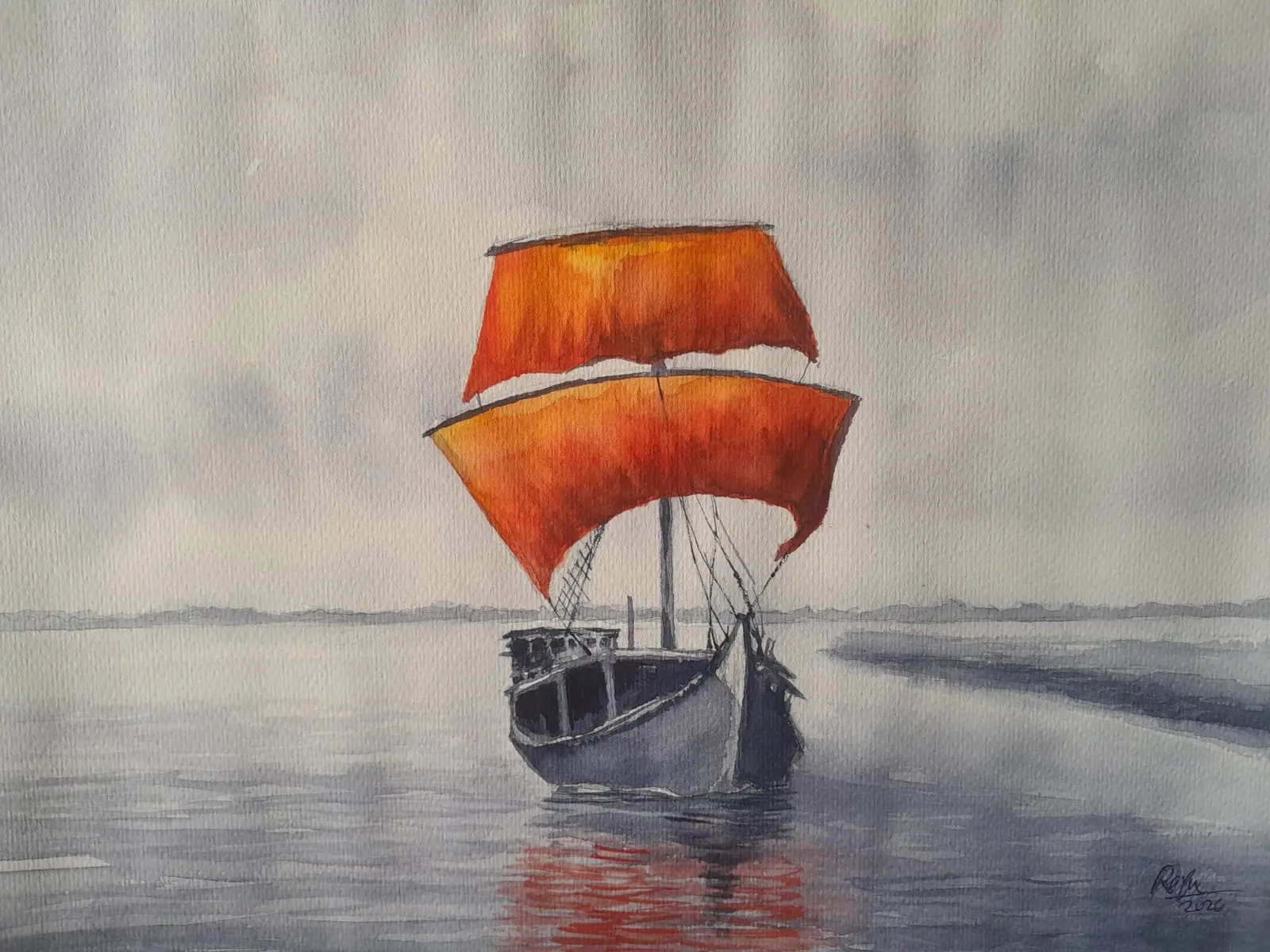
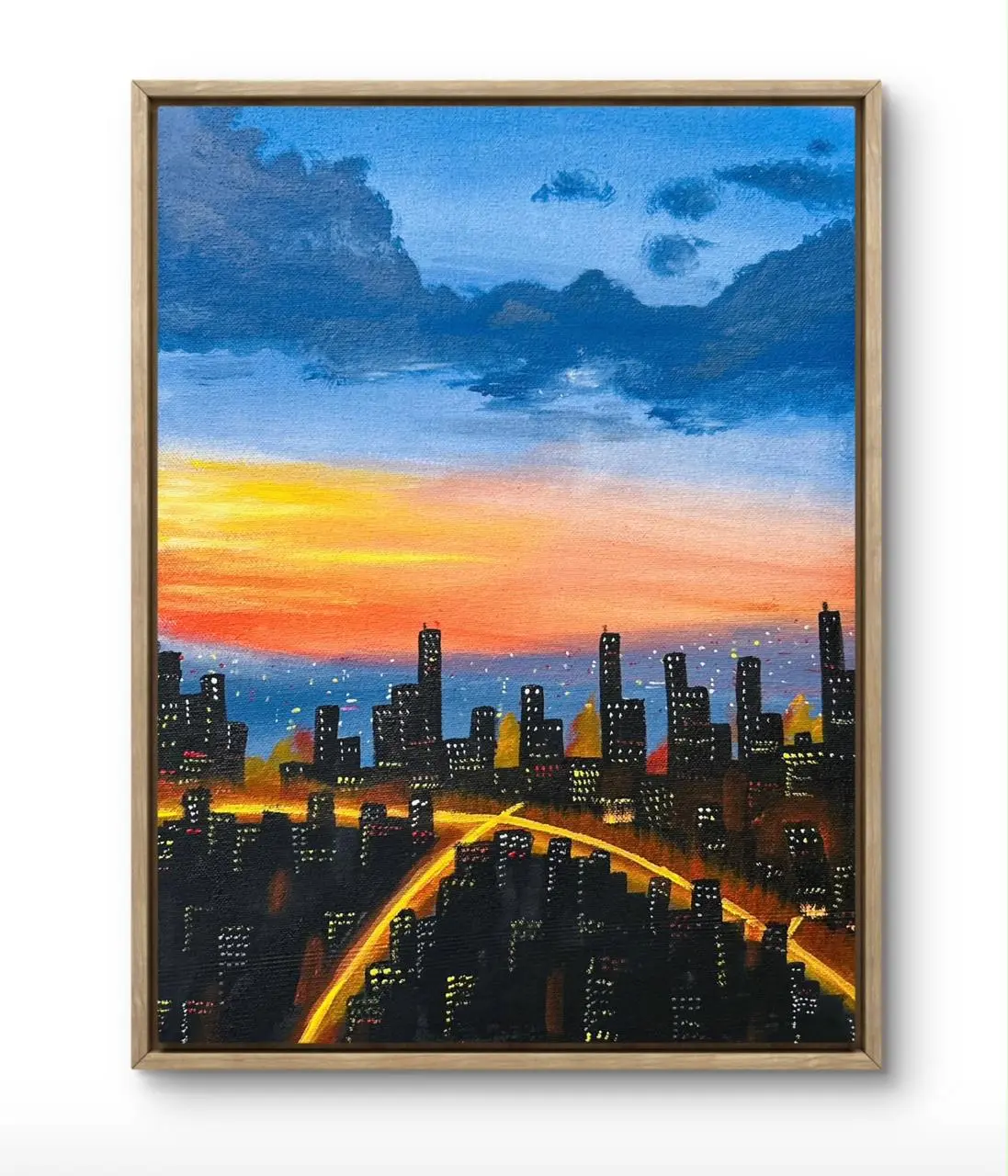
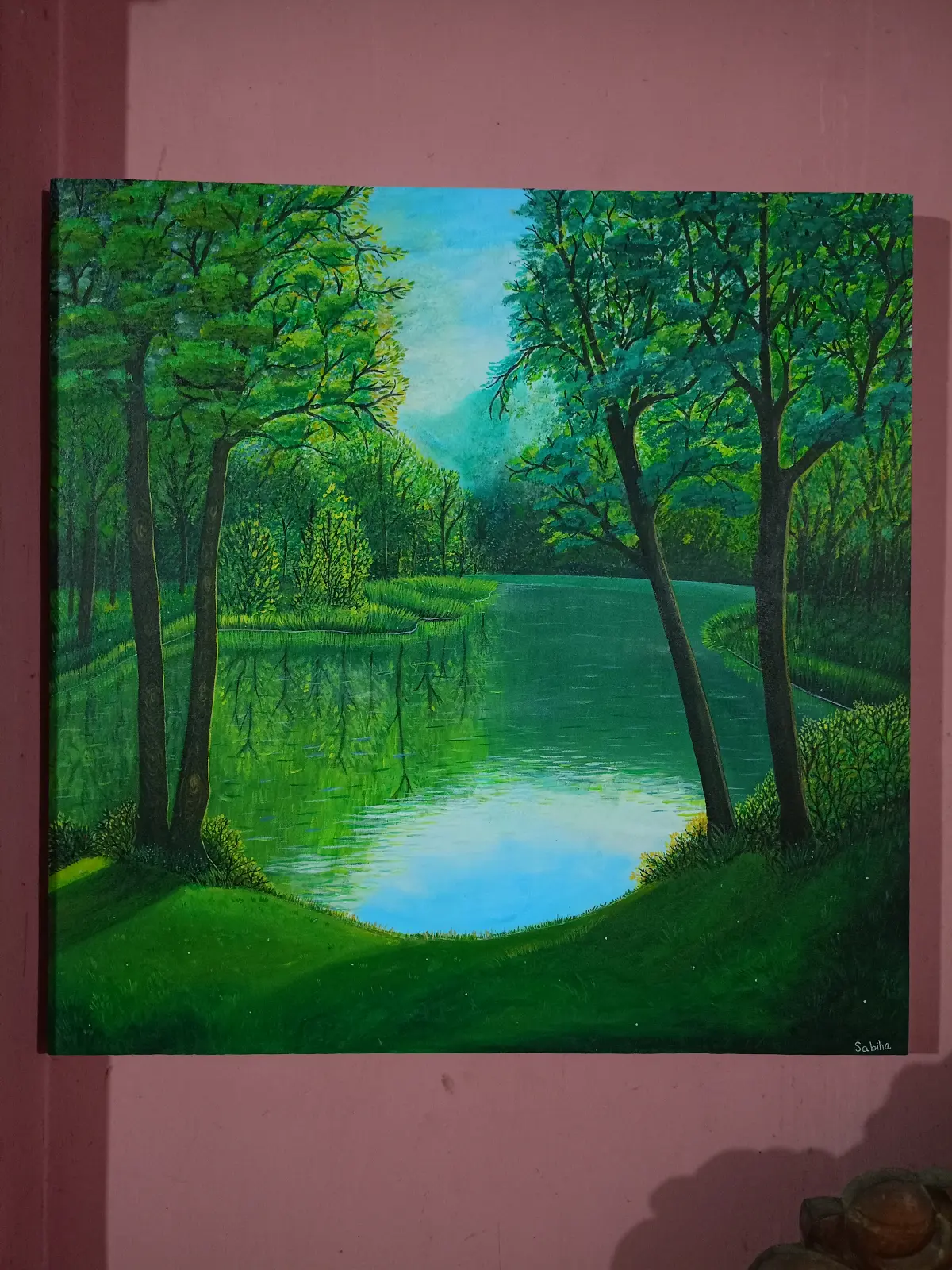
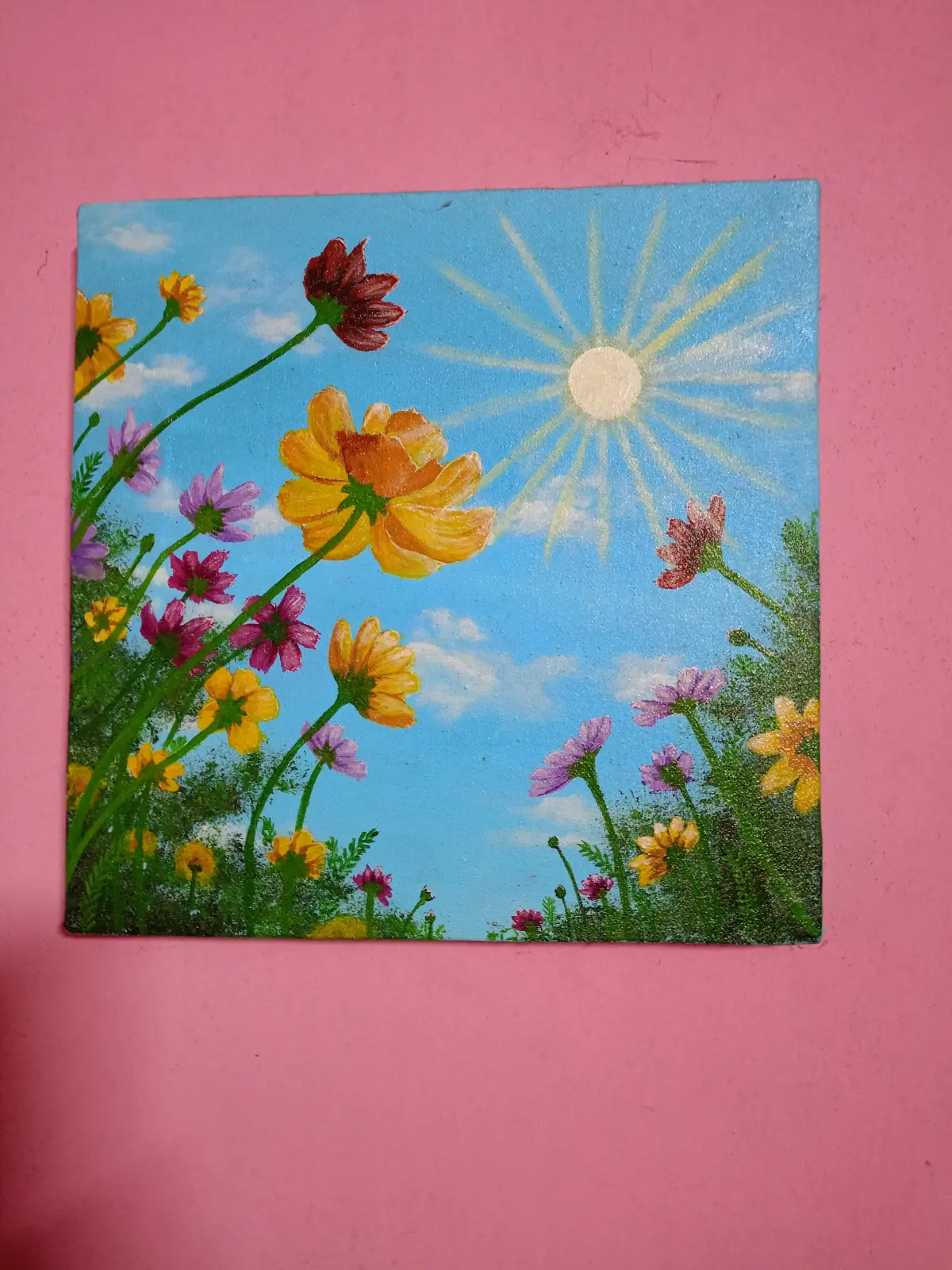
Original canvases by JADUZ painters, from crimson boats to lilies and abstract colour:
 One of a kind
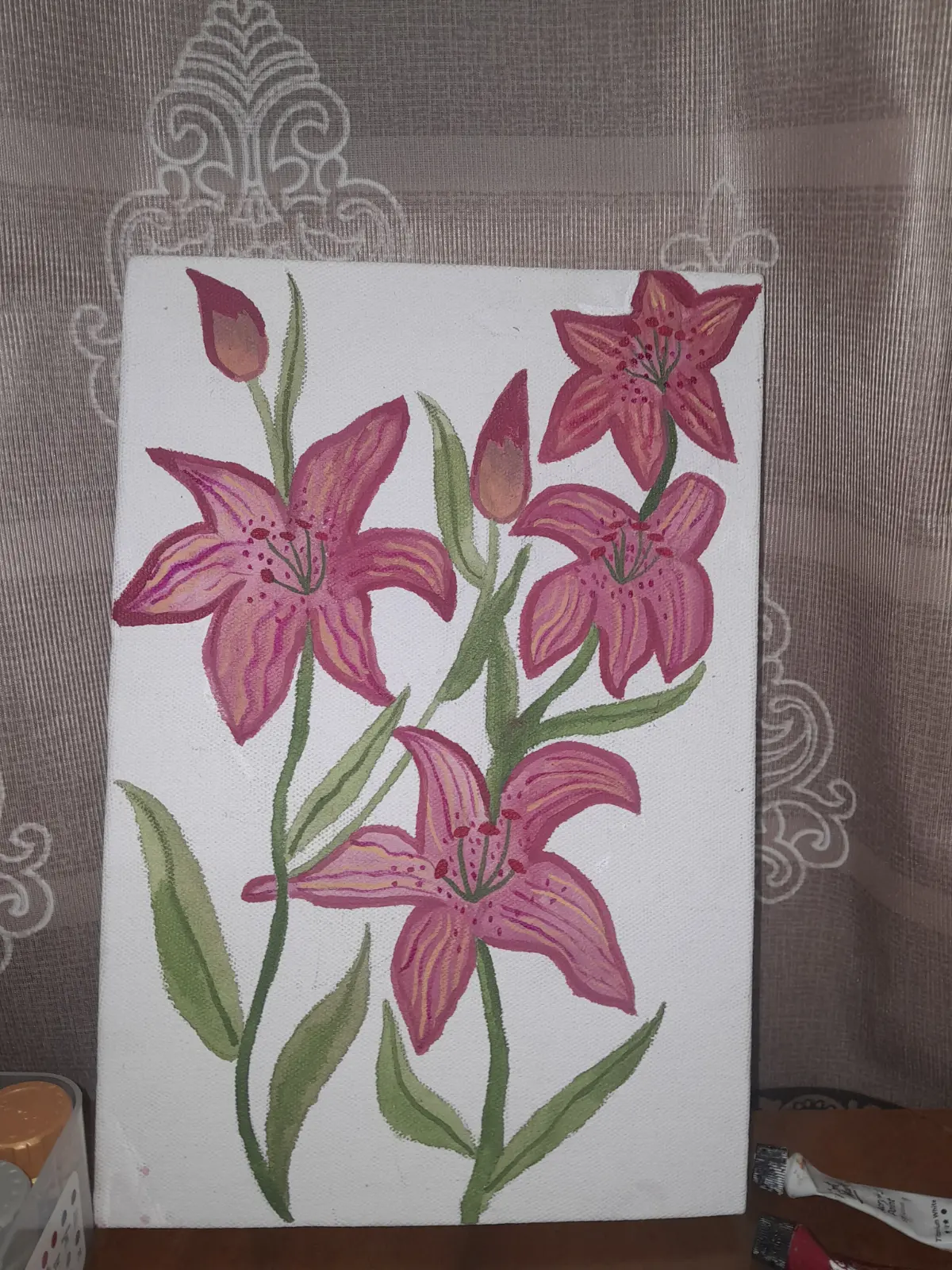
Whispers of Lilies — Hand-Painted Acrylic Canvas Wall Art, Framed
৳1,500
Sanzia Hossain Naisa, Chattogram
Made in 1 days
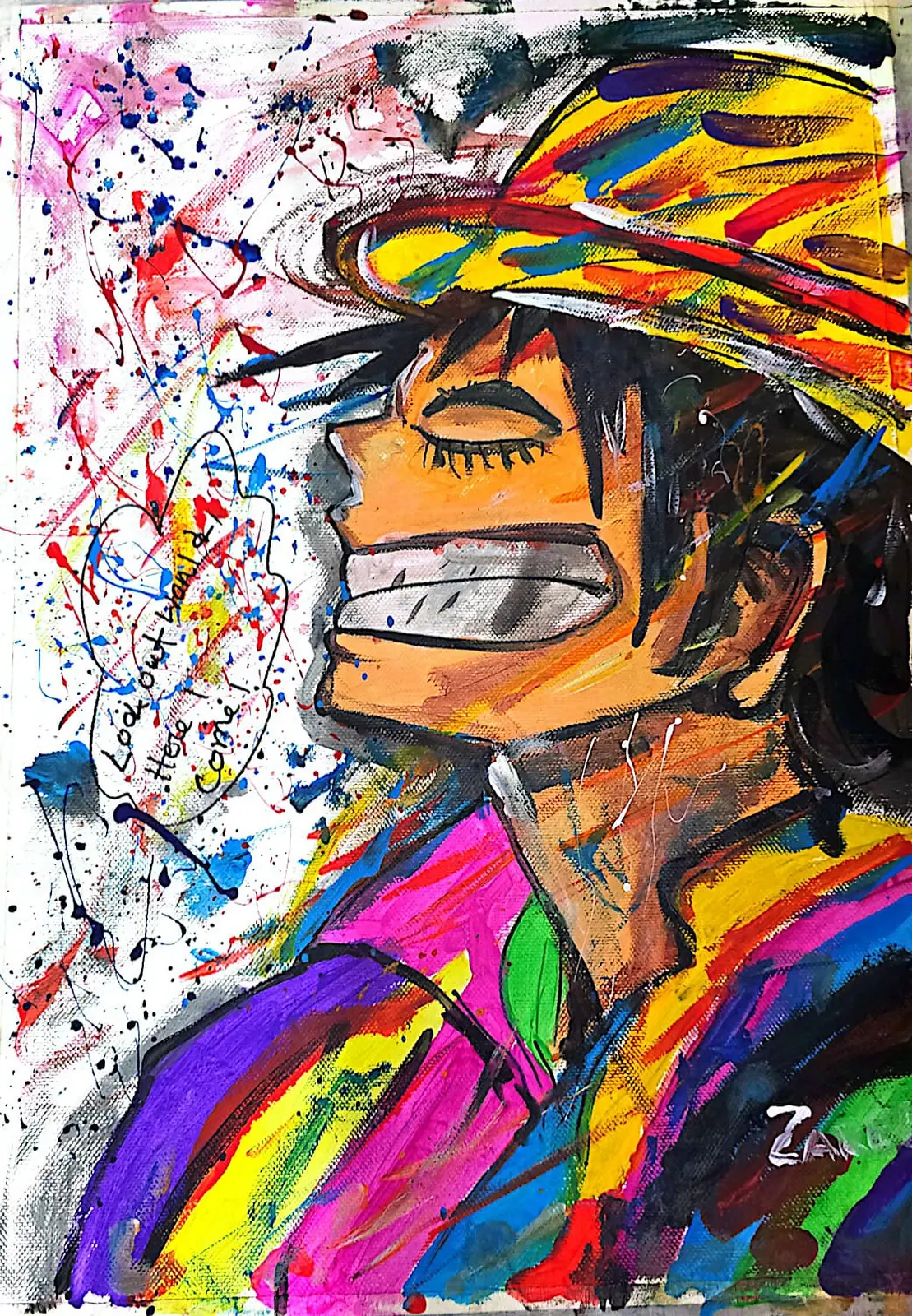
What does an original by a new artist cost?
An original by a new Bangladeshi artist costs far less than a master's work: Art Dhaka 2026's cheapest works were ৳5,000, and decor-scale canvases by young painters sell for less online. Our painting price guide has the full table by artist level, and our acrylic and abstract painting price guide prices canvases size by size.
Be honest with yourself about what you want. If you want a famous name, save up and go to a gallery or a fair: JADUZ doesn't sell works by the masters. If you want an original for your wall, painted by a person you can name, a new artist is the better buy, and you may be early to someone's career. Raised, textured canvases are their own style; see our texture painting price guide.
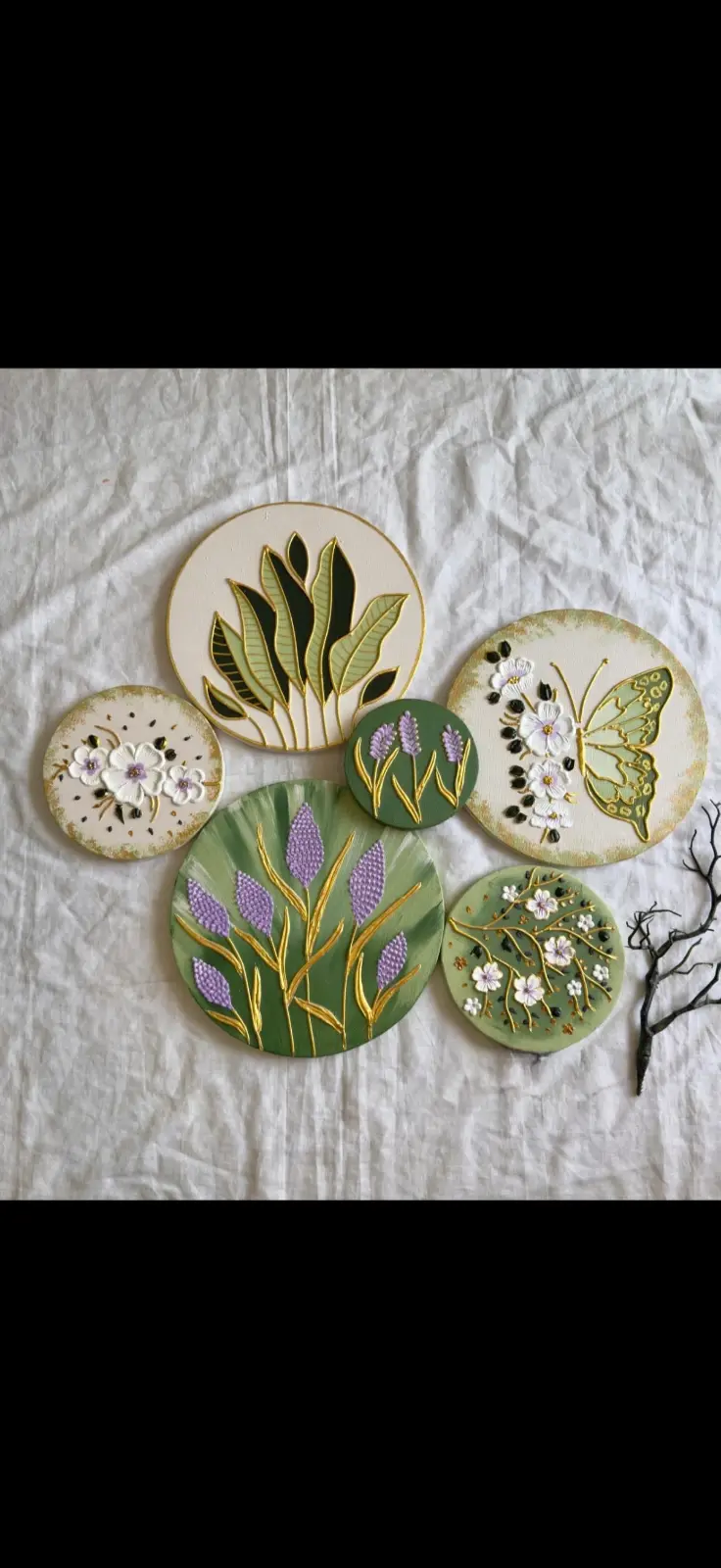
Textured and acrylic canvases by two JADUZ makers:
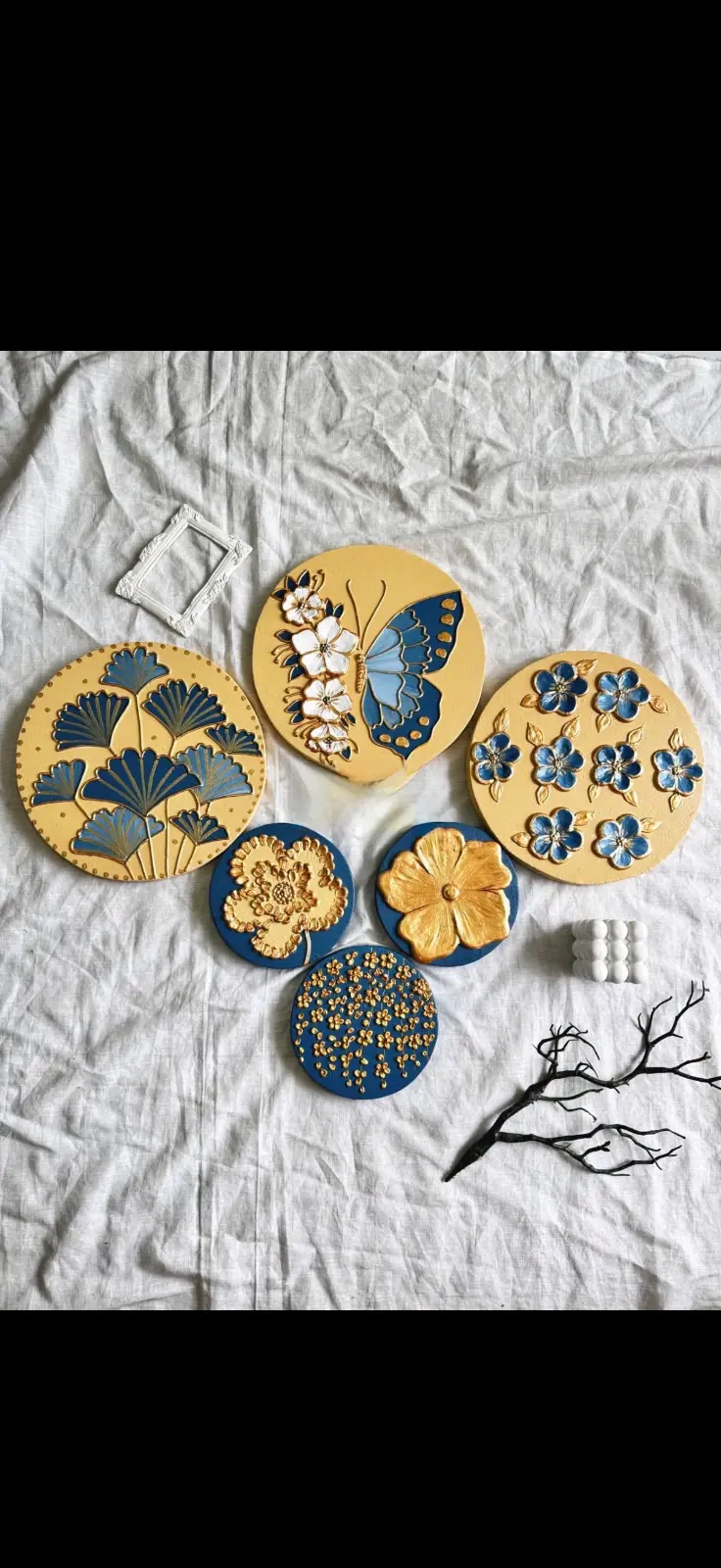
Original Hand-Painted Mustard and Navy Blue Textured Canvas Wall Art
৳1,500
Sabiha's Art & Craft, Dhaka
 Only 1 left
 Only 1 left
On JADUZ you pay cash on delivery anywhere in Bangladesh, after a call to confirm the order. Open the parcel in front of the rider before you pay: if the painting is damaged, wrong or not as described, hand it back and pay nothing. Once the rider leaves, there are no returns, and none for a change of mind (how it works). If you paint and want to sell, see selling paintings on JADUZ.
How do you tell an original from a print?
Look closely with a phone light held to one side: a print shows tiny dots or a grid, while a hand-painted canvas shows brushwork that changes in thickness and direction. Ask for the artist's name, the title, the medium, the size and the year in writing. Our painting price guide has the full checklist.
Who is the best painter in Bangladesh today?
There is no official "best painter" in Bangladesh today, and nobody can fairly rank living artists. The clearest public signal is the state's honours: in 2025 the Ekushey Padak for painting went to Rokeya Sultana, the only artist honoured that year, Dhaka Courier reported.
Among living painters on this list, Rafiqun Nabi, Monirul Islam and Shahabuddin Ahmed have Ekushey Padak or Swadhinata Padak honours and decades of exhibitions, and Farida Zaman received the Sultan Swarna Padak in 2020. For younger painters, the best guide is what you see yourself: the Asian Art Biennale, the Charukala graduation shows and fairs like Art Dhaka.
Which famous painting suits a home wall?
Prints of famous Bangladeshi paintings suit a study or a reading corner, and an original by a living artist suits the main wall of a drawing room. Calligraphy is the other common choice for Bangladeshi homes; Murtaja Baseer himself painted a series, The Light, based on verses of the Quran, The Daily Star noted.
For placing a verse on a wall, read our Islamic calligraphy wall art guide. For sizes and hanging height, see our wall decoration ideas.
The newest paintings from JADUZ makers, as they go live:
Art & Collectibles
See all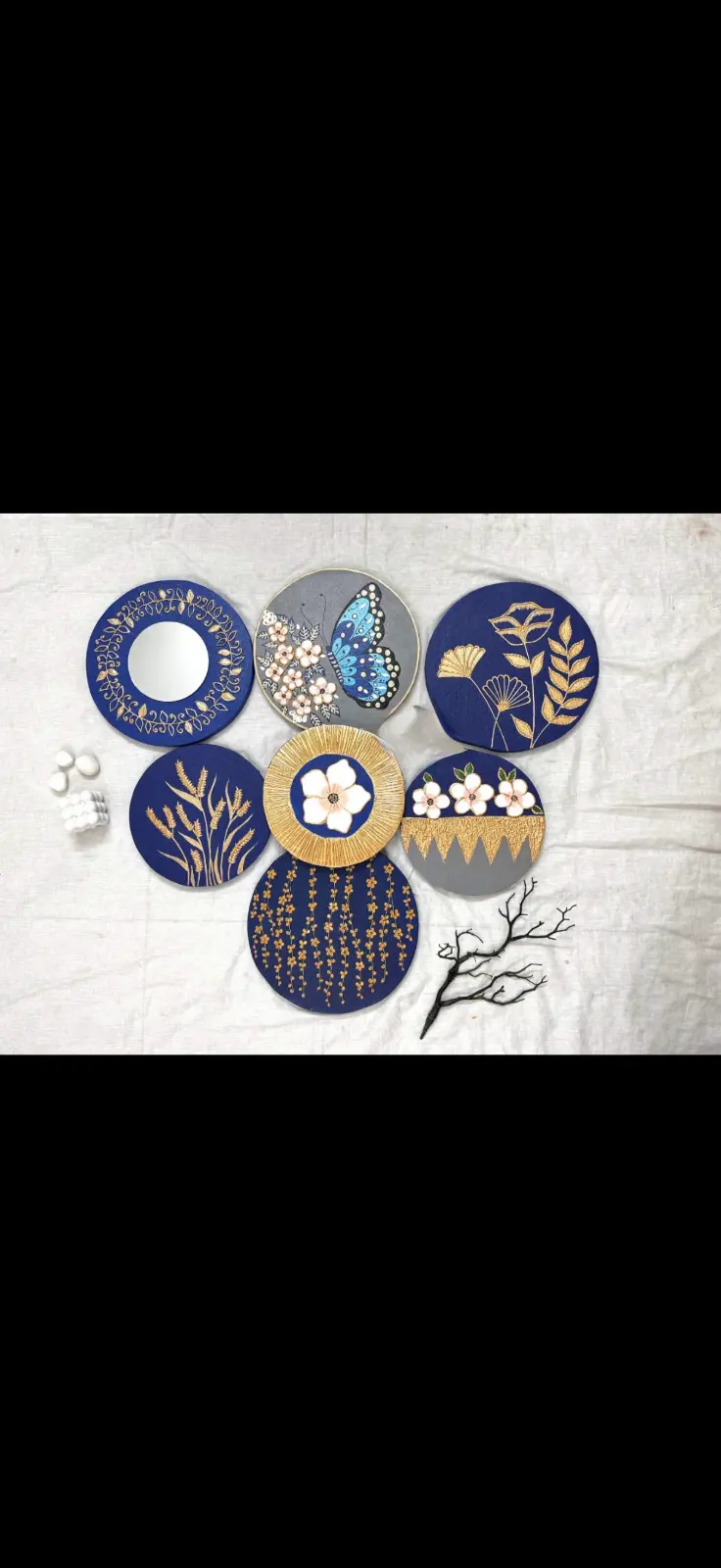
Original Hand-Painted Acrylic Wall Art in Navy Blue, Golden and Grey
৳2,000
Sabiha's Art & Craft, Dhaka
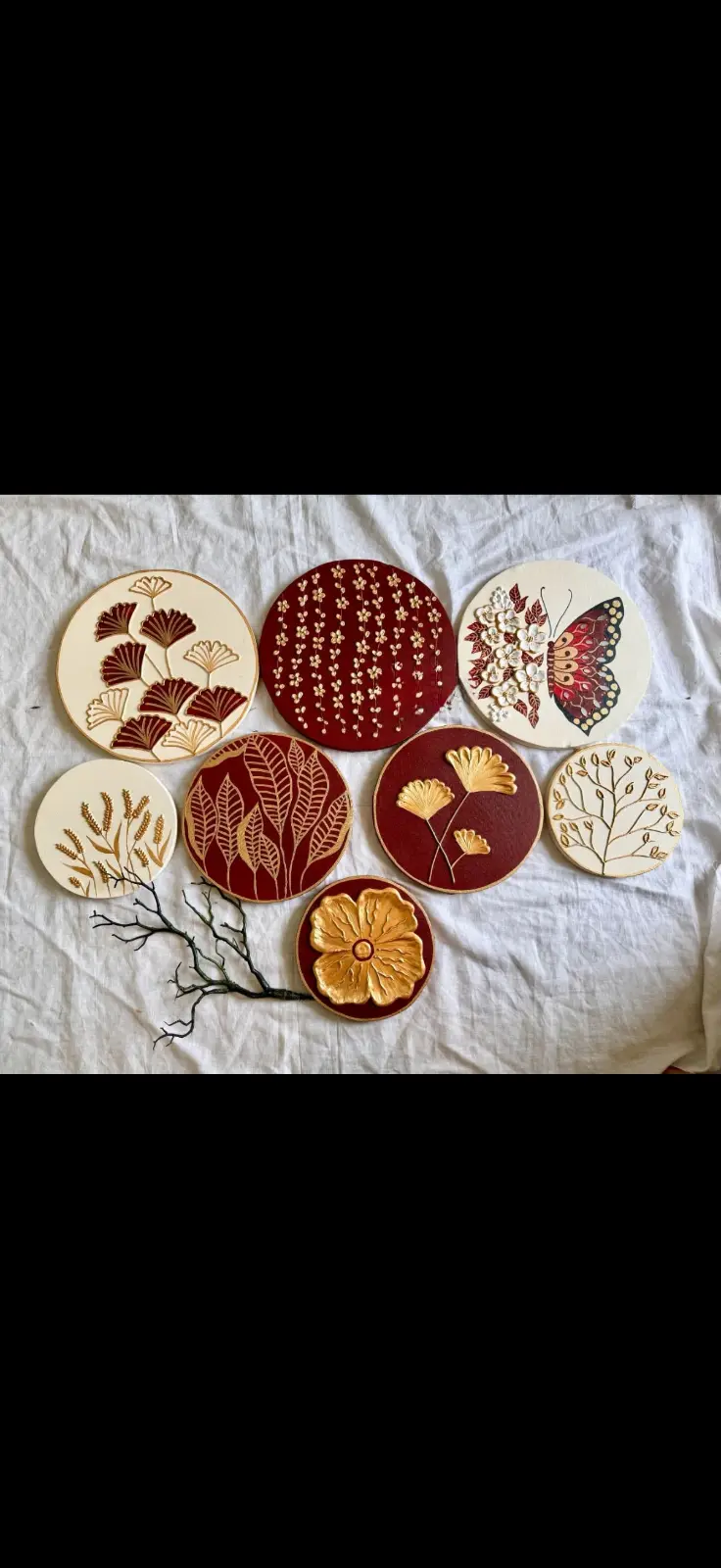
Original Hand-Painted Mustard and Navy Blue Textured Canvas Wall Art
৳1,500
Sabiha's Art & Craft, Dhaka